make preferable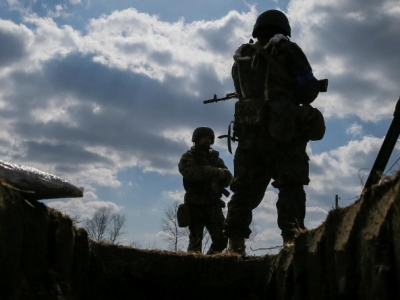
In two weeks, the U.S. will hold a midterm election. Undoubtedly, the economy and inflation will be at the top of the list of voters' concerns. Nevertheless, the state of the world and America's involvement in Ukraine will almost certainly be on their minds, The Hill reported.
"Rather sensibly, the administration has largely avoided engaging substantively with the Ukraine issue in the campaign. Foreign policy is rarely a vote winner and certainly not in this contentious domestic political environment," the article said.
Elections have consequences, and if America continues its critical support for Ukraine, as it should, the administration should do a better job of communicating the importance of fighting Russian aggression. It should frame this fight in terms of American strategic national interests and protection of the rule of law against overt and illegal aggression.
This also requires abandoning simplistic clichés and bumper sticker slogans and asking very difficult questions.
Perhaps the most important question to ask is how will this war end? Not surprisingly, the US and its allies have for the most part left such questions unanswered. An oft-used refrain is that the decision as to how and when is made by Kyiv. While this is not entirely wrong, leaving this question open is a politically convenient and expedient fiction.
It is true that Ukraine decides how to end the war, but to suggest that the US, or the West more broadly, has no influence in this conflict is to ignore reality-they are very much a party to this conflict. The West has an interest in this conflict, and to assume that it simply loads the gun and hands it over to Ukraine is disingenuous at best and dangerous at worst.
Allied capitals are reluctant to answer this question because asking it alone runs the risk of revealing very real rifts in support for Ukraine - support that is fundamentally important to the success of the recent offensive, and indeed an offensive in the future. Were it not for substantial Western support, Ukraine probably would not have achieved the success it has achieved so far.
By leaving it "up to Kyiv," each supporting country can create the illusion that it, too, is not a party to this conflict. If Germany and France do diverge on Ukraine with Estonia and Poland, and then again with the United States and Britain, this necessary unity risks breaking down, opening up opportunities for Russia to exploit.
Kyiv has impressively controlled and succeeded in controlling the messages of this information war. The West, at least publicly, has very little information about Kyiv's goals and intentions, as well as its losses or actions on the battlefield, beyond what is transmitted through social media and journalistic publications. Even posing questions about these critical factors amounts to heresy in the current geopolitical and cultural environment-as if asking the questions themselves were akin to supporting Russia. No, it is not. It is simply a prudent analysis of geopolitical realities that have important policy implications.
War and diplomacy occur simultaneously. Events on the battlefield shape the conditions for political resolution of the conflict. One cannot simply wait until the results of the battle are favorable enough before formulating goals or end states. It is equally foolish to assume that the formulated objectives will somehow cede the initiative to Russia or capitulate to Russian aggression. Rather, it is merely the first step in a complex and brutal waltz toward the end of the war.
Historically, America has been bad at limited wars with unclear objectives, and we are currently in an indirect war with an unclear end. One can infer possible goals or intentions - i.e., depletion of Russian military power, expulsion of Russia from the occupied territories, etc. - but these are only assumptions, not stated policy goals. Is it any wonder, then, that in the absence of clarity, many Americans question the indefinite nature of Washington's support for Ukraine?
Failure to ask what Kyiv's goals are, or what the West's goals could or should be, creates conditions in which the latter may well be drawn into a situation that is neither viable, sustainable, nor even clearly escalatory. Ukraine has demonstrated its willingness and ability to attack Russian territory. After all, it is suspected of organizing the murder of Daria Dugina, the daughter of the analyst Alexander Dugin. The fact that the U.S. administration has exposed Ukraine's hand in the murder suggests that the United States is unhappy with the transparency Kyiv provides and wants to avoid becoming involved in something it cannot and does not want to be involved in.
How willing is the United States to support Ukraine? If Kyiv wants to retake Crimea, will the United States provide the assistance and support needed for this campaign? What if Ukraine decides that stronger strikes on Russian-controlled and Russian-owned territory are necessary? Will the West provide the long-range weapons needed for this offensive? Or would that be a red line for Washington, London, and Brussels? Hyperbolically, what if Kyiv demands nothing less than regime change in Russia? Would the United States support such an outcome?
"Equally too, we must ask what a post-war Ukraine looks like. How much money will it take to rebuild Ukraine’s infrastructure and rehabilitate its economy? Will NATO and the European Union foot the bill? Will it join NATO or the EU? If not now, in the future? If so, what conditions will those organizations ask of Ukraine for national reform and institutional reconstruction? How sustainable is this aid and support at a time of national economic pressures?" the author wonders.
Support for Ukraine is the right fight, but it does not mean one refuses to ask the difficult geopolitical and strategic questions that affect American national interests. Failure to ask these difficult questions now is tantamount to failure to plan - and if we cannot plan, we should not be surprised when reality strikes back