Preferred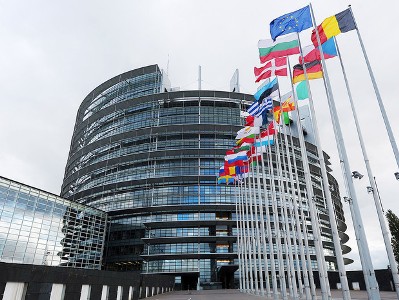
The ongoing blockade of the Lachin corridor is deeply disturbing, said member of the European Parliament Robert Hajsel at the discussions on the humanitarian consequences of the blockade of Artsakh.
He called on Azerbaijan to take all measures to ensure the free movement of people and humanitarian goods along the corridor.
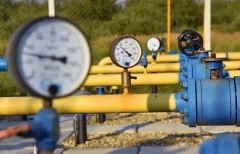
"The humanitarian situation in the region is already aggravated by a disruption of the gas supplies, and can soon be transferred into a humanitarian catastrophe. Around 100 to 20,000 people don’t have access to essential goods and services such as medication and food and fuel," he said.
"We have to strongly condemn the blockage of the Lachin Corridor and urge Azerbaijan authority, and peacekeeping forces to deploy in the region to respect and implement statements from 2020 and two ensure that access is open," he added.
His colleague Martina Michels called on the EU to reject double standards.
"People are freezing and hungry in Nagorno-Karabakh. And they need an air bridge back...The EU should stop double standards," she said.
MEP Klemen Groselj believes that the blockade of the Lachin corridor has geopolitical implications for the stability and security of the South Caucasus.
According to him, Azerbaijani aggression against the sovereign territory of Armenia combined with the blockade of Nagorno-Karabakh follows the situations we have seen in the past in the Balkan wars, as well as in the Russian invasion of Ukraine.
He noted that Azerbaijan, in violation of the UN charter, is preventing any possibility of a comprehensive peace agreement that should guarantee the security rights of the Armenian population of Nagorno-Karabakh.
"This is why Azerbaijan must immediately reopen the corridor to enable freedom of movement, ensure access to essential goods and services, release all the POWs, and fully withdraw its armed forces from Armenia's sovereign territory," the politician said.
"At the same time, the international community should negotiate a replacement of Russian peacekeepers with international peacekeepers under the UN mandate", he added.
MEP Emmanuel Fragkos noted that there are three options for Armenians in Artsakh: they can renounce their identity, leave Artsakh or face the same fate as the Armenians did in Turkey in 1915.
"The saving of the Armenians by an air bridge is the very least that we should be doing by the end of this week," he noted.
MEP Marketa Gregorova recalled that according to its obligations, Azerbaijan is obligated to ensure that the corridor remains open.
"I insisted Azerbaijan refrains from undermining the current defunctioning and allowing for the unhindered movement of goods and civilians," she said.
According to MEP Fabio Massimo Castaldo, although the guns are still silent in Nagorno-Karabakh, the war is far from over.
"We are now witnessing one of the worst sides of the war - the blockade of the corridor," he noted.
He said an EU monitoring mission should have a mandate for a mission to Lachin to verify what is happening on the ground. "we must be proactive so that the population receives the necessary humanitarian supplies. If the Baku regime refuses access, we must impose strong sanctions against those responsible for these atrocities," he said.
In conclusion, EU Commissioner Adina-Ioana Valean assured that the EU is closely monitoring developments in the Lachin corridor since early December 2022.
"In a statement issued on 13 December, the EU called on the Azerbaijani authorities to insure freedom and security of movement along the corridor in line with commitments deriving from the trilateral statement of 8 November 2020. Restrictions to search for freedom of movement are causing significant distress among the local population. They are increasingly alarmed about the negative humanitarian impact resulting from the lack of food, medicine, and other essential goods and medical services in addition to regular disruptions to energy supplies and telecommunications," she noted.
She recalled that the EU had allocated 3.6 million euros for humanitarian purposes in 2022. "The program focuses on two areas for its intervention: economic, and security, which includes programs to provide concept, affected people with material and financial support to have them meet there by basic needs," she said.
"The current situation is not sustainable and creates tension, contrary to the much-needed confidence-building effort," she said.