make preferable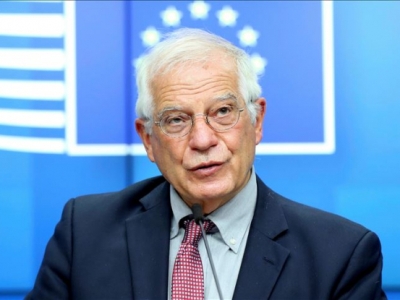
On behalf of the European Commission, Josep Borrell, High Representative of the European Union (EU) for Foreign Affairs and Security Policy, answered the written question of Dimitris Papadakis, a member of the Group of the Progressive Alliance of Socialists and Democrats in the European Parliament, regarding the humanitarian crisis created in Nagorno-Karabakh due to the blockade of the Lachin corridor by Azerbaijan.
In his reply, Borrell said that since the beginning of December 2022, the EU is closely monitoring the developments along and around the Lachine corridor and their humanitarian impact.
He assured that the EU is still seriously concerned about the continuous restrictions on free movement and the supply of vital goods, which cause serious problems for the local population.
In his answer, Josep Borrell stated that he is in close contact with both sides with the assistance of Toivo Klaar, the EU Special Representative for the South Caucasus and the Crisis in Georgia. The EU has called on Azerbaijan to take measures within its jurisdiction to ensure the freedom and security of traffic along the Lachin corridor—and in line with its commitments in the tripartite statement of November 9, 2020. The high-ranking EU official also emphasized the responsibility of Russia in this matter, as according to the same tripartite statement, the Lachin corridor is under the control of Russian peacekeeping forces.
Borrell said that EU humanitarian funding aimed at overcoming the consequences of the Armenian-Azerbaijani conflict amounted to €3.6 million in 2022. It has been fully handed to the International Committee of the Red Cross, the only international humanitarian organization that can operate in areas along the Lachine corridor. Since the escalation of the conflict in 2020, the EU has provided around €27 million in humanitarian aid and rapid recovery to assist the most vulnerable populations affected by the fighting.