make preferable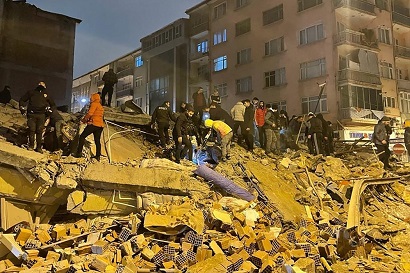
The earthquake that struck Turkey and Syria on Feb. 6 was a cataclysm of unprecedented proportions and the strongest in 100 years.
The southern Turkish city of Antakya and its residents suffered the most. It was once an important trading center and the third largest city in the Roman Empire. But devastating earthquakes have left almost nothing in the city unscathed, writes Euronews.
Antakya was founded in 300 B.C. and has seen many disasters. Over the centuries it has been destroyed and rebuilt many times.
But when a magnitude 7.8 earthquake hit the region, it took everyone by surprise. A few days after the tragedy, help was still arriving slowly.
Without electricity, water and sewage, those who survived the earthquake were at great risk. Infectious diseases such as scabies and cholera spread quickly, and aftershocks occur every day.
In the first few hours after the earthquake, only the hands of survivors, who were in shock, injured and had never done anything like this before, were available to remove the rubble.
Turkish President Recep Tayyip Erdogan said nothing could have been done to prepare the country for such a tragedy. But not everyone in Antakya agrees.
Days after the earthquake, the authorities were still unable to bring the situation under control, even though international aid was pouring in from everywhere.
There is disagreement about who or what is to blame for the chaos. Some say internal divisions, others blame mismanagement.
The catastrophe exposed once again the negative aspects of Erdogan's centralized system of governance, giving the opposition a strong argument to challenge in this year's presidential election. This is a vote that some here believe Erdoğan may try to postpone if he feels his chances for a third term are undermined.
Antakya's main cemetery gives an idea of the scale of the disaster. There is not enough space for the dead, so authorities have opened a mass grave site on the outskirts of the city.
DNA samples are being collected from the unidentified bodies so that families can one day give their loved ones a dignified burial.
Translated with www.DeepL.com/Translator (free version)