make preferable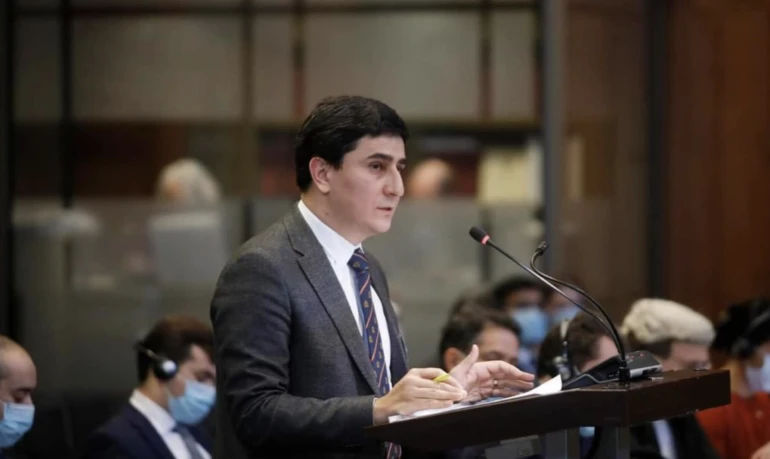
Separating the right of peoples to self-determination from territorial integrity is contrary to international law, as the international legal order was originally built on the coexistence of these two principles. Yeghishe Kirakosyan, Armenia’s former representative on international legal matters and head of the Master’s Programme in International Courts and Arbitration at Yerevan State University, made the statement on October 16 at the international conference The Return of Armenian Prisoners, addressing the charges brought against Armenian prisoners held in Baku.
Kirakosyan stressed that territorial integrity and the right of peoples to self-determination were two essential, complementary principles. Sovereignty over a territory without its people would lose its meaning, since sovereignty was fundamentally about human beings. Focusing exclusively on territory and measuring everything by it would turn the entire international legal order upside down, he said.
He also argued that the trials conducted by Baku were illegal and that there was little point in debating the matter. He could not recall a case in which, in a post-conflict setting, justice had been administered by one of the parties to the conflict. In such circumstances, international judicial bodies would normally take on that role.
Kirakosyan noted that many people now claimed international law no longer existed or had become meaningless, but in his view, such deeply pessimistic attitudes were themselves undermining it.
He said states themselves should have an interest in preserving the international legal order. In all cases, these trials and the rulings they produced carried considerable weight.
They also offered an opportunity, particularly for countries such as Armenia with a history of conflict, to counter competing narratives that were often highly aggressive.
Without an international forum where a country could present its arguments, evidence and account of the truth, it would lose that contest, he said.
Kirakosyan expressed confidence that the transformation of the international legal order would lead to a logical next stage, as such an order could not simply cease to exist. He suggested that the current period of turbulence would pass within a few years and that the same system would be reassessed. In this context, he said, it was particularly important for countries such as Armenia to continually reaffirm their ties to the international legal system and remain actively engaged in it.
He emphasized the importance of the cases Armenia had brought before international judicial bodies, adding that they also carried significant political weight. If they had no political significance, he concluded, they would not have become the subject of discussion.