make preferable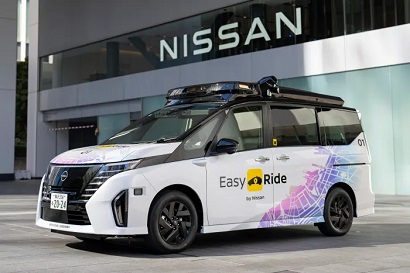
Nissan has taken a step toward premiering its new autonomous mobility service by navigating a challenging urban road without a human in the driver’s seat using the Nissan Serena, Japan’s best-selling minivan, reports Autoblog.
The developing service aims to reconcile local transportation challenges, such as driver shortages, stemming from the country’s aging and declining population.
Nissan’s driverless test occurred today in Yokohama’s Minato Mirai region on busy streets filled with cars and pedestrians within the area’s top speed limit of 25 mph.
Nissan facilitated the Serena’s driverless operation with 14 cameras, nine radars, and six LiDar sensors inside and surrounding the minivan. The roof-mounted sensors are more cutting-edge in expanding detection via Serena’s elevated height than the automaker’s previous test vehicles. Artificial Intelligence (AI) also enhanced environment recognition
Before the experiment, Nissan engineers verified responses to several scenarios the route may present, including an immediate stop for emergencies. The vehicles were monitored remotely, with the remote viewer being able to take over if necessary. There was also a human in the front passenger seat.