make preferable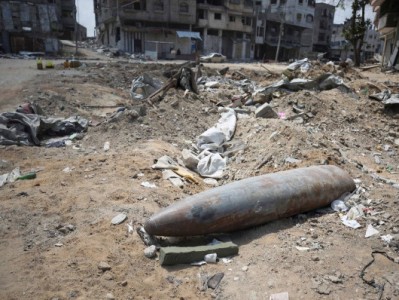
Demining the Gaza Strip and removing unexploded bombs and ordnance left after two years of Israeli military operations could take around 30 years, according to a representative of an international NGO operating under the UN in the blockaded Palestinian enclave.
“The territory of the Strip has become a minefield, and clearing unexploded bombs and shells left in the enclave from Israeli shelling and airstrikes could take 20 to 30 years,” the NGO representative told Maan. He added that neutralizing all unexploded devices in Gaza is “simply impossible,” as many are buried very deep underground. “Even just locating and defusing explosives on the surface will take an entire generation,” he said.
The representative also noted that Israeli authorities have not granted permission to bring in the necessary equipment to detect and neutralize unexploded ordnance. According to him, the NGO has also been denied permission to import specialized equipment for safely burning explosives, which would prevent detonating the ordnance in place and avoid potential reuse.
Earlier, a representative of the international NGO Handicap International, which works on clearing explosives and assisting victims of landmines, estimated that during the fighting in Gaza since October 2023, Israeli forces dropped around 70,000 tons of bombs and shells on the enclave. UN analysis indicates that 5–10% of these bombs and shells did not explode.
According to the Gaza administration’s press office, at least 20,000 unexploded devices—including artillery shells, mines, bombs, and rockets fired by the Israeli army—are currently buried under rubble and on city streets. These unexploded munitions, the press office warns, “pose a real danger both to local residents returning to their homes and to workers and specialists clearing debris in the populated areas of the Strip.”
On October 6, delegations from Israel and Hamas resumed indirect negotiations to resolve the situation in Gaza, mediated by Egypt, Qatar, the US, and Turkey. On October 9, the parties signed an agreement implementing the first stage of a peace plan previously proposed by US President Donald Trump. The Gaza ceasefire came into effect on October 10.