make preferable
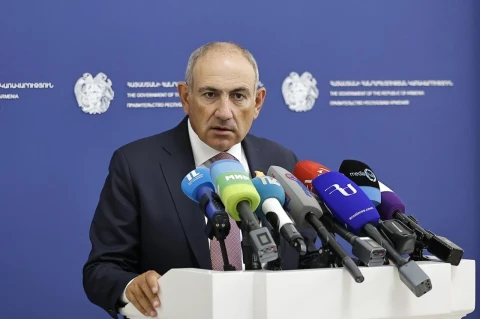
Siranush Sahakyan, Director of the International and Comparative Law Center and representative of the Armenian prisoners’ interests at the European Court of Human Rights, has told Armenian News-NEWS.am that according to information from the family well-known Armenian philanthropist, businessman, former Artsakh (Nagorno-Karabakh) State Minister Ruben Vardanyan, he has been relocated to the Umbaki Penitentiary in the Garadagh district of Baku, the capital of Azerbaijan.
Below is the text of our respective interview with Sahakyan.
Ms. Sahakyan, Ruben Vardanyan’s recent statements, first addressed to Azerbaijan’s human rights defenders and then to Armenia’s, have raised serious concerns. Now that the Red Cross’s activities have been suspended and the trial process, during which occasional photos allowed for at least a certain degree of assessing their condition, has concluded, what information is currently available about his state, the condition of the other detainees, and the circumstances in which they are being held?
The situation is alarming and troubling. I have information from Ruben Vardanyan’s family that he has been transferred from a pre-trial detention facility under the National Security Service to a penitentiary institution under the Ministry of Justice: the Umbaki penitentiary complex in Baku’s Garadagh district. According to our information, other Armenian detainees have also been transferred to this facility.
Nothing is known about the conditions of his detention or that of the other detainees in the new facility. There is no transparency on this matter either, and the guarantees established by international law are being violated. In particular, family members were not informed in advance about where and when the transfer would take place, nor about any changes in regime or phone access. There is no reliable information about their health, access to medical care, or basic living conditions. As you know, since September of last year, at the request of the Azerbaijani government, the activities of the International Committee of the Red Cross (ICRC) in that country have been suspended. After that, only once, in December of last year, the ICRC’s Geneva office managed to carry out a visit and meet Armenian detainees. Since then, we have had no verified information about their condition.
I can only say that phone calls with family members are still currently maintained, and some information is conveyed during these private conversations. However, there is no independent body conducting direct observation or monitoring and systematically recording their condition, which creates an information vacuum.
Ruben Vardanyan also stated that to this day, the verdict has not been provided in any language, which effectively hinders the appeal process. Do you have any updates on this? If the verdicts are not delivered within the set deadlines, does this mean they cannot even apply to, for example, the European Court?
The European Court of Human Rights has obliged Azerbaijan to provide the detainees’ verdicts by August 31. This decision may serve as an incentive for the provision of those documents.
At the same time, this does not mean that by withholding the verdicts Azerbaijan can block access to international courts. On the contrary, in such a situation, it can be established that domestic legal remedies are ineffective, and in such cases, the time limit for applying to the European Court begins from the moment the judicial acts are actually received.
It should be noted that the European Court has become an important channel at this stage, as certain documents, including those concerning the detainees’ health, are being obtained through the Court’s efforts. We know that Azerbaijan had submitted such information to the Court back in January, but in February, it filed a new motion requesting the Court to lift interim measures applied in relation to the Armenian detainees and to cease the obligation to submit reports.
In response to this motion, we have presented our position, substantiating that immediate threats to the detainees’ life and health persist. Moreover, the lack of information itself is a serious cause for concern and may be considered a circumstance indicating a risk of torture. Under such conditions, the continued involvement of the European Court remains critically important.