make preferable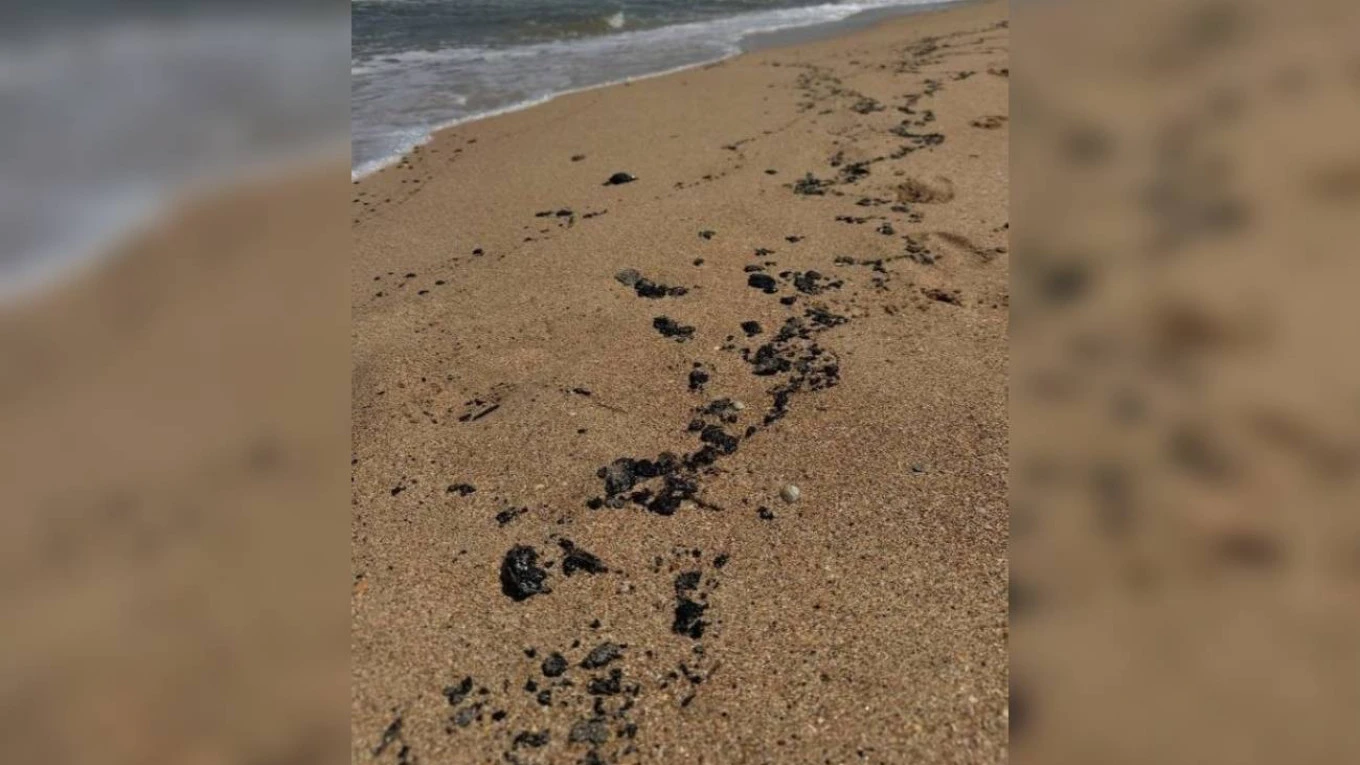
On July 14, petroleum product discharges were discovered along the shoreline in the Temryuk district of Krasnodar Krai after a new oil slick appeared near the seaport of Taganrog in the Sea of Azov. Contamination was identified along the coast from the Chushka Spit to the village of Kuchugury, with a total length of about 5–6 km, according to the Kuban operational headquarters. The authorities declared a state of emergency in the territory of the Zaporozhskoye rural settlement and deployed 69 employees of the regional Emergencies Ministry department, officials, volunteers, as well as nine pieces of equipment to clean up oil-contaminated soil and “accumulations of polluted algae.” Residents of the Temryuk district also reported fuel oil discharges, environmentalist Georgy Kavanosyan writes.
According to residents, people in the village of Ilyich near the Kerch Strait were already complaining about contamination on July 13, and the next day in the village of Kuchugury. Residents of the stanitsa of Golubitskaya also reported fuel oil washing ashore. “The stretch of discharges of the fine fraction is several kilometers. Literally 500 meters away is the Tamano-Zaporozhsky nature reserve, where up to 1 million birds stop during migration. It is now the nesting period there,” Kavanosyan wrote. In addition, the operational headquarters reported on the cleanup of fuel oil discharges in the Primorsko-Akhtarsk district. A total of 125 people and 20 pieces of equipment were involved in the work. At the beginning of July, new oil traces appeared in the area of the sunken tanker Volgoneft-239.
This is indicated by satellite images from July 1 and 6 cited by the OSINT project Sky Eye. Analysts noted that the oily film could have formed as a result of a leak from the bow section of the vessel, which sank in the Kerch Strait in December 2024. This may have been caused by pumping operations on the ship and the rise in water temperature in the Black Sea.
On July 12, the specialized resource Pixel Planet reported the formation of “film pollution,” presumably from vessels in the Sea of Azov that had previously been attacked by Ukrainian drones. A number of slicks on the water surface were recorded in optical and radar satellite images from July 11 and 12. “Some of the trails literally stretch from the vessels themselves. Also, on July 11 and 12, an extensive slick is observed near the port of Taganrog,” the channel noted.