make preferable
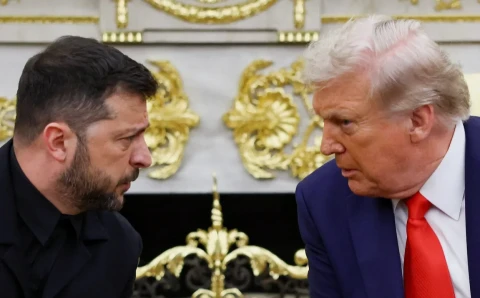
U.S. President Donald Trump caused a stir with his interview on Fox News, in which he threatened to intensify strikes on Iran. “Next week, things will get really bad for them. We will level all the power plants to the ground. We will disable all their bridges,” Trump said.
For now, this is just another threat, but carrying it out would mean abandoning the current policy of retaliatory strikes. Security expert Professor Barry R. Posen of the Massachusetts Institute of Technology told Bild: “So far, this entire conflict has essentially revolved around negotiations and around Iran holding on to what it believes it has already gained. That will change [...], if Trump, out of frustration, carries out his threat to destroy Iranian infrastructure.”
In that case, Iran will try to strike infrastructure on the other side of the Persian Gulf, Posen said. It will carry out strikes on Bahrain, Kuwait, and the Emirates. As soon as that happens, “oil prices will skyrocket, and even Israel could once again be drawn into” the war. This means that the threat of large-scale escalation is emerging.
However, Trump has little time for a new escalation. Dissatisfaction with the war is growing in the United States—both in the opposition and among the president’s fellow party members. And new elections to the U.S. Congress will be held on November 3.
Political scientist Professor Matthew A. Baum of Harvard University noted: “There is no short-term solution to this war. Because I do not know what Trump could now offer Iran beyond the last deal. Compromises on the nuclear program and control of the strait are impossible from the U.S. point of view.”
If hostilities intensify and prices rise, this issue will come to the forefront in the media.
“This, in turn, will increase pressure on Congress,” Baum said. Whether Trump will decide to carry out his threat under such conditions is unclear.