make preferable
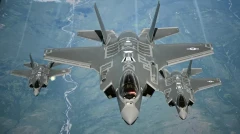
In a letter to Congress, the US State Department said that Turkey will not be able to receive F-35 fighter jets until it gives up the Russian S-400 surface-to-air missile systems and meets other requirements of US law. Turkish Minute reported this.
Despite statements by US President Donald Trump about his intention to lift sanctions and consider the possibility of selling F-35s to Ankara, the existing legislative restrictions remain in force.
The July 22 letter, obtained by the Greek newspaper Kathimerini, was prepared by the State Department on behalf of the White House in response to a request from Democratic Congressman Wesley Bell regarding Turkey’s possible return to the F-35 program.
The document emphasizes that US law prohibits the transfer of F-35 fighter jets to Turkey until it complies with the requirements of the CAATSA law (“Countering America's Adversaries Through Sanctions Act”) and other legal provisions.
Among the conditions named are abandoning the Russian S-400s and related equipment, a commitment not to acquire similar systems in the future, and meeting the remaining certification requirements.
“Turkey has not yet met these conditions,” the letter says.
It also notes that negotiations between Washington and Ankara on resolving the dispute over the S-400s are ongoing. Any agreement, the State Department emphasizes, must be “transparent, lawful, and consistent with US national security interests.”
The State Department’s position differs from statements made earlier this month by Donald Trump after a meeting with Turkish President Recep Tayyip Erdoğan at the NATO summit in Ankara, when the American leader said that Turkey would receive F-35 fighter jets.
The letter also says that the US views Turkey as an important NATO ally and intends to continue cooperation with Ankara on issues of mutual interest, while at the same time holding it accountable in cases where its actions run counter to the interests of the United States.
In addition to the F-35 issue, the document also touches on broader questions of US-Turkey relations. In particular, it notes that Turkey supports US diplomatic efforts to resolve the conflicts between Russia and Ukraine, Azerbaijan and Armenia, as well as the situation in the Gaza Strip, and participates in regional counterterrorism operations against ISIS.