make preferable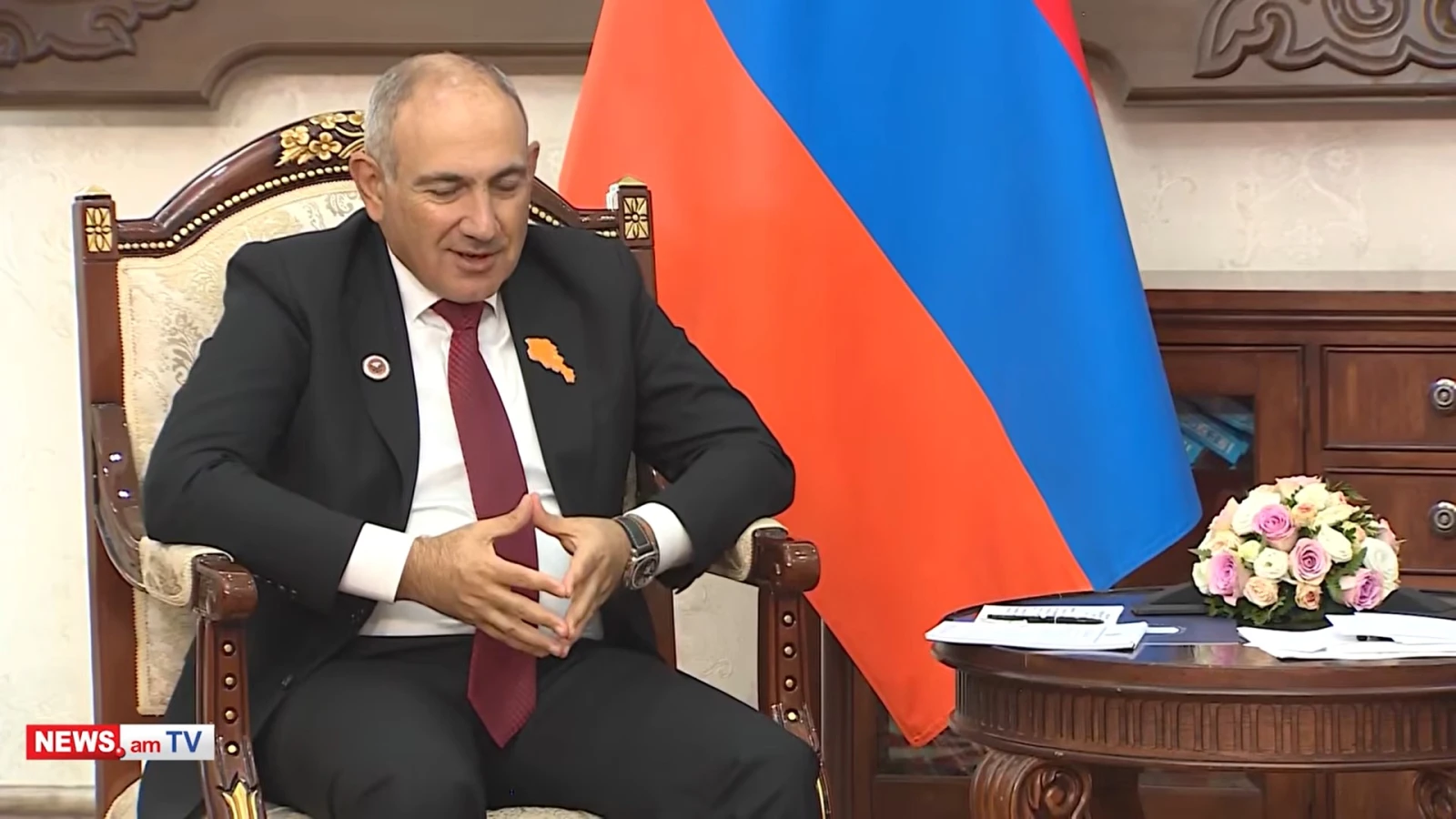
Armenian Prime Minister Nikol Pashinyan stated that Yerevan is interested in further deepening and developing relations with Russia, while emphasizing that the changing situation in the region requires a new look at bilateral ties. He said this during talks with Russian President Vladimir Putin on the sidelines of the Shanghai Cooperation Organization (SCO) summit in Bishkek.
“First of all, I am very glad about this meeting and this occasion, because indeed many issues have accumulated that need to be discussed. First of all, I want to confirm that we are interested in the further development and deepening of our relations with the Russian Federation,” Pashinyan said.
According to the Armenian prime minister, the situation in the region around Armenia has changed significantly in recent years. In particular, he noted the establishment of peace in the region and said that under the new conditions relations between Moscow and Yerevan should be viewed differently than during the period of conflicts.
“It seems to us that we need to look at the situation with a fresh perspective, and I think this will contribute to the development of our relations. And we mean the deepening and development of our relations,” Pashinyan said.
He also commented on Putin’s remarks about the role of Russian companies in Armenia’s economy. The prime minister noted that many Russian enterprises operate successfully in the republic, make profits, and are major taxpayers. At the same time, according to him, the situation with Russian business in Armenia is mixed.
“A great many Russian companies operate very successfully in the Republic of Armenia. They are highly profitable, you are right, they pay taxes. But these companies should still be divided into two parts. There are companies that operate successfully, that is, they are profitable and developing, but there are also companies that, unfortunately, are unprofitable and are not developing,” Pashinyan said.
He called this a problem for both Armenia and Russia and proposed discussing the related issues separately.
A significant part of Pashinyan’s statement was devoted to Armenia’s relations with the European Union and the possible impact of the European course on the country’s obligations within the Eurasian Economic Union (EAEU).
The prime minister recalled that last year the Armenian parliament adopted a law launching the process of Armenia’s accession to the EU. At the same time, Pashinyan emphasized that this concerns precisely the start of the process, not a decision on the country’s accession to the European Union.
According to him, before and after the adoption of the law, Yerevan analyzed the contractual framework of relations with Russia and the EAEU documents and found no violations of its obligations.
“Both before and after this, we analyzed the contractual framework that exists between the Russian Federation and Armenia, and the contractual framework that exists in the Eurasian Economic Union. And, frankly speaking, we found no violations of those obligations that Armenia has toward the Russian Federation and toward the Eurasian Economic Union,” Pashinyan said.
He referred to the provisions of the EAEU treaty regulating the procedure for a state’s withdrawal from the bloc. According to the prime minister, the treaty provides for the need to notify partners in advance of a decision to leave the union, and such notification must be made six months in advance.
“At this moment, we have not informed our partners that we are going to leave the Eurasian Economic Union. I think we need to rely on this fact,” Pashinyan said.
Thus, the Armenian prime minister effectively challenged the interpretation according to which the adoption of the law launching the process of accession to the EU already means Yerevan’s decision to leave the EAEU.
Pashinyan also explained his position regarding a possible referendum on Armenia’s accession to the European Union. He said that the parliament’s adoption of the law launching the process of accession effectively meant abandoning the idea of holding such a referendum at this stage.
According to him, the legislative initiative initially came from civil society. If parliament had rejected the bill, its initiators could have collected another 250,000 signatures, after which the issue of holding a referendum would have had to be put to a vote.
“That is, by adopting this law, it effectively turns out that we gave up the idea of a referendum,” Pashinyan said.
He explained that the reason for this decision was the lack, in the opinion of the Armenian authorities, of sufficient political and public readiness to formulate a question for submission to a referendum.
“This issue has not matured to the level at which a question could be formulated before our people,” the prime minister said.
At the same time, Pashinyan emphasized that the law was not adopted in order to withdraw Armenia from the EAEU or worsen relations with Russia. According to him, Yerevan seeks to preserve for the country the possibility of choice and the availability of alternatives.
“It is very important for us that our country and our people have alternatives. I think this is a legitimate goal,” he said.
Pashinyan stressed that such a policy, in his view, corresponds to the realities of an emerging multipolar world and should not be perceived as an anti-Russian step.
“This does not mean that we are dissatisfied with the Eurasian Economic Union,” the prime minister said, noting that Armenia has operational and strategic issues within the EAEU that Yerevan continues to discuss with its partners.
“And this process is not against Russia, not against the Eurasian Economic Union, because we highly value our relations with the Russian Federation,” Pashinyan emphasized.
He said that the Armenian authorities consider Russian-Armenian relations important for their country and expect that Moscow also views them as significant.
“Both the Republic of Armenia and the Russian Federation — and we personally — must treat these relations with great care,” Pashinyan said.
In conclusion, Pashinyan thanked Putin for his attitude toward Russian-Armenian ties.