make preferable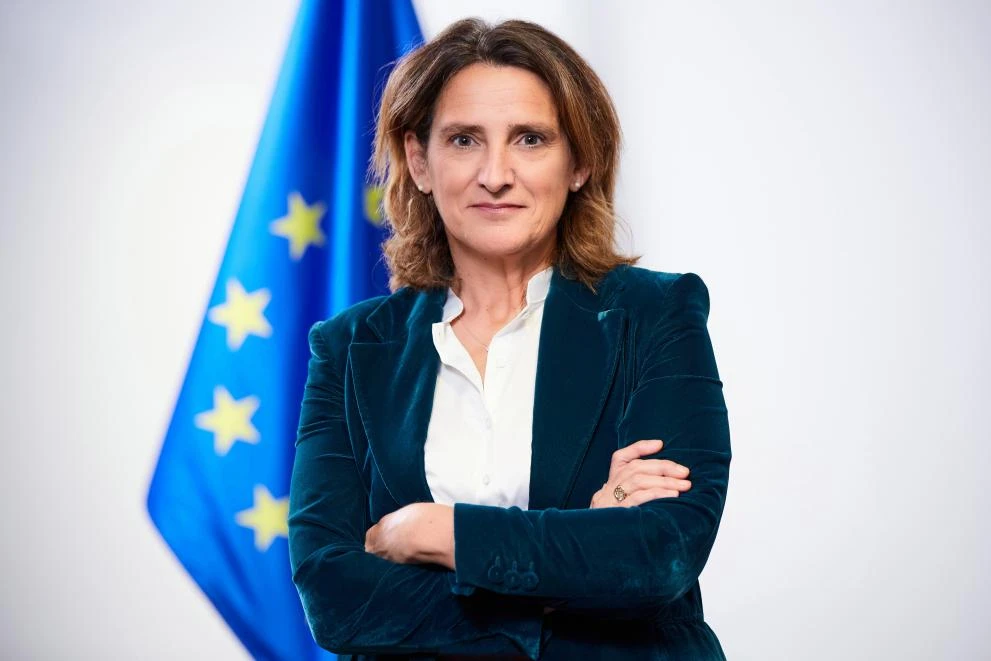
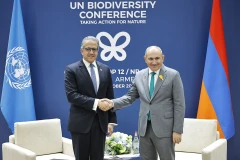
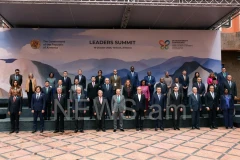
The European Union has backed Armenia’s call for stronger global action to protect biodiversity, stressing that the loss of healthy ecosystems poses systemic risks to humanity. Teresa Ribera, the European Commission’s Executive Vice-President for a Clean, Just and Competitive Transition and Commissioner for Competition, made the remarks on October 16 at the Leaders' Summit on Biodiversity held as part of COP17 in Yerevan.
She noted that 55% of global GDP depended heavily on nature, with annual economic losses from nature-related factors estimated at $10 trillion.
More than 75% of the world’s food crops depend on pollinators, and their declining populations pose a direct threat to global food security. More than half of modern medicines are derived from natural sources. Water is an essential resource for people, food production and well-being, while around 10% of global greenhouse gas emissions are linked to land use, land-use change and forestry.
Ribera stressed that healthy ecosystems were humanity’s most reliable and cost-effective form of protection, as well as the foundation of human prosperity. Protecting and restoring biodiversity was an investment in well-being, peace, the future, the economy and the interests of future generations. Such efforts were essential to preventing new pandemics and developing new medicines, mitigating and adapting to climate change, and ensuring water and food security. They also safeguarded the natural resources on which every sector of the economy and every community depended. The Global Biodiversity Framework adopted in Montreal was intended to give this process real momentum.
She identified the top priority as moving from ambition to practical implementation of the framework. Reversing biodiversity loss would require tangible changes at both global and local levels. For the European Union, international credibility began with fulfilling its commitments at home. Concrete action was needed, along with a focus on identifying areas where progress was lagging and gaps still needed to be addressed. The EU was stepping up its efforts under the EU Biodiversity Strategy for 2030. Its Nature Restoration Regulation translated these ambitions into clear legal obligations, including measures for restoration at the national level.
Globally, the European Union was increasing its financial support and launching a pilot initiative to advance scientific knowledge and protect ocean health. Ribera called on others to join these efforts.
She also highlighted positive developments: international public funding for biodiversity conservation had increased by 94% in 2024 compared with the 2018–2020 period. The European Union was firmly on track to double its international biodiversity funding to €7 billion over the 2021–2027 period. Thirty-five percent of the EU’s next budget would be allocated to climate and environmental objectives. Ribera also announced that Europe’s contribution to the key Natural Africa initiative had reached €1.6 billion, €200 million more than originally planned.
In 2023, funding for activities harmful to nature reached $7.3 trillion, almost 30 times the amount invested in nature-based solutions. Ribera argued that it was impossible to finance the destruction of nature with one hand while paying for its restoration with the other. At the current conference, the EU was initiating the establishment of a “friends group” on nature credits. The pilot phase would help build trust and demonstrate the mechanism’s tangible benefits. She also called for consideration of the role artificial intelligence could play and how its development could be kept within natural boundaries.
Ribera welcomed Armenia’s strong commitment to practical action and its initiative to build political momentum through a call to action, which the EU had proposed supporting. She said this joint appeal should send a clear signal.
The results needed to match the scale and urgency of the crisis. Persistent geopolitical tensions and rapidly intensifying adverse impacts—including heatwaves, droughts, fires, water shortages, biodiversity loss and pollution—were not separate problems but interconnected challenges.
Ribera asked what the international community should take away from Yerevan: faster implementation of solutions, increased funding, appropriate incentives and an approach that ensured the meaningful involvement of everyone whose participation was essential to achieving these goals. She said the European Union was ready to contribute and support Armenia’s efforts.
She concluded that the EU intended to work seriously, openly and decisively, recognizing that healthy ecosystems were essential for climate resilience, human well-being, and water and food security. Yerevan, she said, should mark the moment when the international community moved from promises to tangible results.