Preferred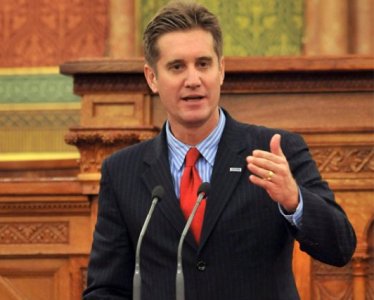
Former US Minsk Group co-chair Matthew Bryza in an interview with Day.Az. commented on the Nagorno-Karabakh elections.
People all around the world are focusing on COVID-19 pandemic. But those governments that drew attention to the so-called ‘elections’ in Karabakh unanimously noted that they did not recognize the results of the vote, he noted.
“This is official information that I just got acquainted with the governments of UK and Norway,” he added. Regarding the mediation of the OSCE Minsk Group in the Nagorno-Karabakh conflict, as Bryza noted, the elections will not have any impact at all.
According to him, such ‘elections’ were repeatedly held by the so-called ‘representatives’ of Armenians in Nagorno-Karabakh. “Based on personal experience as the co-chair of the Minsk Group from the US, I am sure that yesterday’s ‘elections’ will not affect real talks,” he added. And this is all because no country in the world and even Armenia has recognized and is not going to recognize this enclave as an independent state.
Today, every country adheres to the very policy that recognizes the international legal reality that Nagorno-Karabakh remains a part of Azerbaijan, he added.
The former co-chair of the OSCE Minsk Group added these elections can affect the relations between Armenia and Nagorno-Karabakh.
“The previous ‘head’ of Nagorno-Karabakh was a puppet of the former regimes of Robert Kocharyan and Serzh Sargsyan, ruling in Armenia and representing the Karabakh clan. The newly elected ‘president’ Arayik Harutyunyan is considered a closer person to the current PM of Armenia, Nikol Pashinyan. Nevertheless, Harutyunyan is an oligarch whose legitimacy is being questioned due to charges of significant falsification of votes and a very low turnout in the second round of the so-called ‘elections’. Thus, the change can only consist in the fact that the old Karabakh clan that ruled Armenia will no longer have an impressive influence in Nagorno-Karabakh,” he added.
Commenting on how relations between Azerbaijan and Armenia will develop in the future, Bryza expressed regret that Pashinyan has changed his approach to the Nagorno-Karabakh conflict. "Having come to power after the so-called 'velvet revolution’, Pashinyan showed a desire to be as flexible as possible and achieve progress in the process of resolving the Armenian-Azerbaijani conflict by establishing trusting relations with President of Azerbaijan Ilham Aliyev. At the beginning of 2019, the leaders of the two countries held a productive meeting, after which they agreed on measures to prepare the population for peace. However, this approach changed in the summer, and Pashinyan started to make statements contrary to his words,” he added. “Therefore, by changing his position, Pashinyan virtually nullified the possibility of progress in the settlement of the Nagorno-Karabakh conflict.”
According to the former ambassador, Pashinyan had to change his initial approach to resolving the conflict in Nagorno-Karabakh due to tremendous pressure from the Karabakh clan.
“Feeling the risk of losing his personal rating, Pashinyan struggled to consolidate his political strength. However, if he intends to continue to adhere to the publicly declared policy according to which Nagorno-Karabakh is either independent or part of Armenia, I think that this rhetoric will only aggravate the progress of the negotiation process,” Bryza added.