make preferable
Domestic policy
A joint statement against the Armenian-Turkish protocols signed by 12 political parties on October 6 proved to be the most important event in Armenia’s political life this week. Official cooperation between the Armenian Revolutionary Federation (ARF) and the Heritage Party has obviously been launched. All the other forces that signed the statements do not play any serious role in the country’s political life. The closer relations between the ARF and the Heritage Party eventually “embodied” in the joint statement obviously resemble an attempt to form a new alliance laying a claim to filling the niche of “constructive Opposition” that has remained “unoccupied” for a year and a half. Considering the ongoing processes, it is the impulsive disposition and propensity for extraordinary steps shown by Raffi Honhannisyan, the founder and behind-the-scenes leader of the Heritage Party, that remains the only potential obstacle to the successful formation of an Opposition to “the authorities’ taste.” The demand for resignation of the Armenian President in case the Armenian-Turkish protocols are signed — which can be considered an accomplished fact – may prove to be a stumbling block as well. Unlike the ARF, the Heritage Party may demand Serzh Sargsyan’s resignation. We can witness further developments soon.
One of the 19 active opposition members has been released this week. After considering the investigatory measures, the RA Prosecutor General’s Office ordered the investigation of the Tigran Arakelyan case to be completed. The young member of the Armenian National Congress (ANC) is charged with using violence against a policeman. The RA Prosecutor General’s Office decided to change the measure of restraint and release him on his own recognizance. The reason for the decision is the expert opinion of the Head Ophthalmologist of the RA Ministry of Health: damage of the optic nerve of the left eye. The result is one arrestee less among the Armenian oppositionists. This means fewer accusations of “sadism” against the authorities.
One more shoot-out involving a member of the ruling coalition occurred early this week. Karo Karapetyan, member of the Prosperous Armenia Party, had a quarrel with Artur Zadoyan, a resident of the village of Dvin, Ararat region, Armenia, The police reported that Zadoyan hit Karapetyan on the head with a car key. In response, the Parliament member took five shots at the “offender” from his personal Browning. Two shots hit Zadoyan in the leg and in the arm. The investigation is, by tradition, unlikely to have any serious consequences for the member of one of the ruling parties in Armenia. Incidents like that are common occurrences in Armenia, which, however, has a most unfavorable effect on the reputation of both the authorities and the country as a whole – all the more so when the Establishment representatives either hush up the matters or even try to justify the crimes.
Nagorno-Karabakh peace process and region
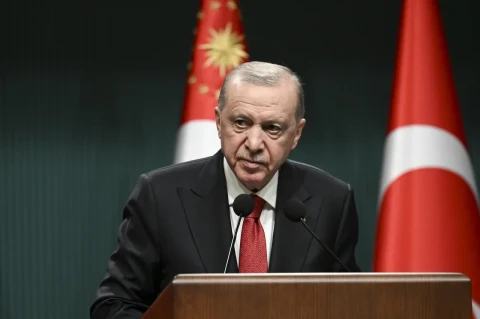
Six-week political consultations on the Armenian-Turkish protocols were completed on the threshold of the signing ceremony scheduled for October 10.
The calm vein of the consultations confirmed the opinion on the leading opposition forces feigned discontent with the normalization process. Although, led by the Republican People's Party (Turkish: Cumhuriyet Halk Partisi or CHP) headed by Deniz Baykal, they stated their intention to vote down the protocols, no practical steps followed. All this is in favor of the opinion on the Turkish elite’s desire to simulate a complicated process of voting on the protocols in the Turkish Parliament, the aim being to reduce the probability of large-scale actions in Armenia.
They failed, but the actions of protest in Yerevan are, in any way, of not so large scale as was expected. The regular 48-hour hunger strikes the Armenian Revolutionary Federation (ARF) staged in front of the RA Foreign Office proved to be more of benefit to the Armenian-Turkish protocols than to their detriment. One could make sure of that once again on October 9, when, despite active propaganda, only a few thousand people participated in a procession and a rally against the protocols. A joint statement criticizing the Armenian-Turkish normalization process signed by 12 political parties did not swing the pendulum in favor the proponents either. Ignoring the fact that ten of them do not play any essential role in the country’s political life, one more reason for the small-scale actions of protest should be highlighted. The second component of the political alliance being formed, Heritage Party, lack wide experience in organizing mass protests. Moreover, some of its members never concealed the fact that the greater part of their electorate is not “rally mongers.” With the ARF’s low rating, and the recent big scandal within the Heritage Party considered, one understands the causes of the political forces’ failed attempts to raise a wave of public protest against the authorities’ foreign policy and inform the public of their stance.
This week has seen the final part of RA President’s one-week pan-Armenian tour, when the Armenian leader held meetings with representatives of the largest Armenian communities. The Armenian President’s visit to Paris, New York, Los Angeles Beirut and Rostov-on-Don showed how painful a matter the Armenia-Turkey normalization process is for the Armenian people. No wonder – and for a number of reasons. Turkey’s support to Azerbaijan during the Nagorno-Karabakh war and its pertinacity in not admitting the Armenian Genocide are constantly arousing doubts about the Turkish authorities’ sincere efforts to normalize relations with Armenia. On top of all that, ten years of the ex-president Robert Kocharyan’s radical policy toward Turkey. As a result, his successor, who acted as follower of Kocharyan’s policy during last year’s presidential campaign, finds it most difficult to explain the reasons for changes in the authorities’ foreign policy to the Armenian public and the Diaspora. Under the circumstances, the President’s pan-Armenian tour was accompanied by numerous actions of protest in the United States, France and Lebanon. It should be noted that a number of factors whipped up the Armenian public’s interest in the actions of protest. First, biased official coverage of the tour by almost all the TV channels made many people get information from the Yerkir Media TV channel, which is, in fact, run by the ARF and went to the other extreme.
Serzh Sargsyan himself, in his long speech at an enlarged meeting of the RA National Security Council, tried to “shatter” the impression of his wish to get the support of the whole Diaspora – and he actually succeeded. “My goal was not at all to state, on returning from the pan-Armenian tour, the whole Diaspora is supportive of the signing of the Armenian-Turkish protocols.” The President underlined the importance of the visits in the context of opinions voiced for the purpose of switching the authorities’ tactics at different stages of the Armenia-Turkey normalization process. Incidentally, in arguing for signing the protocols, President Sargsyan decided to make a “crystal clear” statement on the accusations of recognition of the present-day Turkish borders against Armenia’s incumbent authorities – and he sounded remarkably straightforward in contrast to RA Foreign Minister Edward Nalbandian. The President stated that laying territorial claims is not the best way of starting the normalization process, referring to the actualities of political culture of the 21st century, which cannot be ignored. The statement is in harmony with his policy since he initiated the “football diplomacy”, which implies rejecting an emotional approach to the Armenian-Turkish relations.
Thus, the consultations in Armenia and Turkey reached their logical end. A bit of noise and some bickering, but the Armenia-Turkey normalization process, which is in the highlight of the key geopolitical players, is running its course.
This week the Armenian and Azerbaijani Presidents, Serzh Sargsyan and Ilham Aliyev, have held “an extremely confidential” meeting. No information leakage followed the second presidential meeting in Chisinau, with RF President Dmitry Medvedev participating in it. From the scraps of information contained in the OSCE Minsk Group Co-Chairs’ statements on the progress and agreement on a new Armenian-Azerbaijani presidential meeting one gets the impression the sides and the international mediators are unwilling to exert additional pressure on public opinion in Armenia, Azerbaijan and Turkey at the crucial stage of the most painful Armenia-Turkey normalization process.
Economy and social life
The Armenian Government’s new initiative has gone flop this week. The Government planned to stir up the population’s interest in buyer checks. After the intricate lottery system showed an extremely low number of winners, the Government decided to introduce a bonus system. From this April on, all the “loser” checks can be used to get bonuses equal to 2-3 per cent of the cost of the purchase. Specifically, 50 “loser” checks to the total amount of 100,000 AMD collected during 90 days can be “exchanged” for a bonus of 2,500 AMD. However, the Government has decided to stop bonus payments. RA Prime Minister Tigran Sargsyan stated that inspections revealed serious violations in this process. Specifically, enterprises effecting fixed payments in place of profit taxes began paying wages to their personnel in terms of checks. Some citizens sold their checks to others. The Armenian Premier said that bonuses will equal 1% of the cost of purchase from January 1, 2010. So one more vigorous campaign for demanding buyer checks is going down in history: hardly any actor will be able to persuade the vulnerable sections of the population to demand buyer checks in making purchases from next year. Considering the Government’s failed initiative to replenish the budget by means of penalties for breaking traffic rules (unwilling to “feed” the state budget, the Armenians became law-abiding citizens in a few days), Tigran Sargsyan will most likely to have to put up with the hopelessness of advancing new initiatives of this kind and think of realistic steps to promote economic development.
The Government decided to allocate funds for housing in the disaster zone. Under the 2009-2013 plan, a total of 74bn AMD have been allocated for the rehabilitation. RA Minister of Urban Development Vardan Vardanyan told reporters that about 7,000 people need housing in the disaster zone. The 74bn AMD are intended for the construction of 500,000 sq. meters of housing. The housing will be provided free of charge. The Minister reported that 40 flats were put into service last week. “We have not addressed the issue of completing the 500 construction projects of this year. We will start this work next year,” the Minister said. Vardanyan gave assurances that 3,200 of the 7,000 families will be provided with flats this and next year. If the current rates are maintained, the program can be completed a year earlier, in 2012.
The RA Committee for Protection of Economic Competition eventually paid attention to the overpriced Yerevan-Moscow air tickets. Talking to journalists, Commission Chairman Ashot Shahnazaryan pointed out that three Russian and one Armenian airlines carry out Yerevan-Moscow flights. However, they show low price fluctuations. “It smells of monopoly contracts between the airlines,” the Minister said. He added that the Armenian side will discuss the current situation on the Armenian air transportation market with the Interstate Antimonopoly Council. Shahnazaryan also pointed out the fact that the fuel price was reduced from U.S. $1,540 down to U.S. $760 after the Commission interfered last year. However, the ticket price remained unchanged. The decision to indicate the ticket price in terms of Euro in place of USD hit consumers in their wallets as well.