make preferable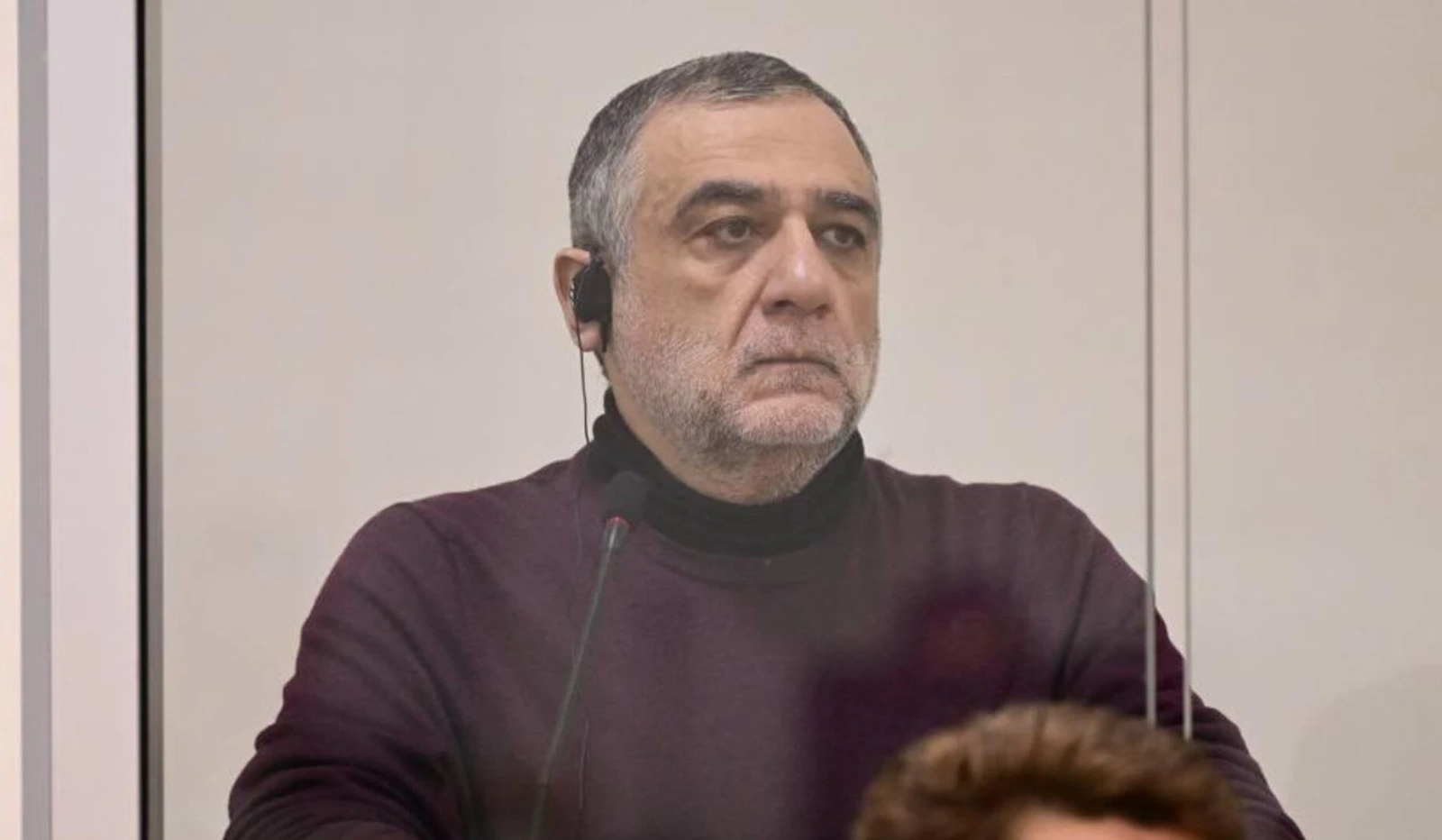
Exactly three years ago today, on September 27, while on the path of forced displacement toward Armenia along with thousands of Artsakh residents, prominent philanthropist and humanitarian Ruben Vardanyan was arrested by Azerbaijani authorities near the Hakari bridge and transferred to a Baku prison. His arrest was followed by the detentions of former Minister of Foreign Affairs of the Republic of Artsakh David Babayan; former Commander of the Artsakh Defense Army Levon Mnatsakanyan; former Deputy Commander of the Artsakh Defense Army Davit Manukyan; and former Presidents Arkadi Ghukasyan, Bako Sahakyan, and Arayik Harutyunyan; as well as Speaker of the National Assembly of the Republic of Artsakh Davit Ishkhanyan.
Below are the key facts and developments recorded in the cases of Ruben Vardanyan and the other Armenian captives during this period:
2023–2024
The preliminary investigation into the cases brought against Ruben Vardanyan and the other Armenian prisoners lasted approximately one year and four months.
Ruben Vardanyan’s defense team announced that nearly 42 potential charges had been brought against him. The fabricated evidence was presented across 422 volumes totaling 105,000 pages, entirely in Azerbaijani. Neither adequate translation nor sufficient time was provided to examine these materials. Charges of virtually the same scope and content were filed against the other 15 Armenians.
On April 5, 2024, Ruben Vardanyan went on a hunger strike to draw the international community’s attention to the plight of the illegally detained Armenian prisoners. It was later revealed that he was subjected to torture during the hunger strike. On June 13, 2024, Ruben Vardanyan’s international legal team submitted an urgent appeal to the United Nations (UN) Special Rapporteur on Torture, reporting instances of torture and ill-treatment committed against him by the Azerbaijani government.
In November 2024, Ruben Vardanyan’s international attorney, Jared Genser, announced that the Prosecutor General’s Office of the Republic of Azerbaijan had denied him entry into Baku, thereby violating norms of international law.
On January 16, 2025, Ruben Vardanyan managed to transmit a message from the Baku prison through his family, declaring that since the first day of his arrest, he had given no testimony, that all records bearing his signature were falsified, and that his lawyer and translator had been forced to sign those documents.
On January 17, 2025, the international human rights organization Amnesty International responded to Ruben Vardanyan’s statement, urging Azerbaijani authorities to guarantee his right to a fair trial.
2025
On January 17, 2025, nearly one year and four months after his illegal arrest, the so-called “trial” began at the Baku Military Court. Ruben Vardanyan’s case was severed from that of the other Artsakh officials and prisoners. During the very first session, Vardanyan filed a motion to join his case with the joint proceedings of the others, but the court denied this and all of his subsequent motions. The trials of both Ruben Vardanyan and the 15 other Armenian captives were conducted with numerous violations of Azerbaijani legislation and international legal standards. Only one or two state-controlled Azerbaijani media outlets were admitted to the closed-door hearings. All applications from independent international observers to attend the trial were either rejected or ignored.
On February 19, 2025, Ruben Vardanyan initiated a second hunger strike to protest the judicial farce being carried out against him. Subsequently, on March 12, 2025, the European Parliament adopted a resolution condemning Azerbaijan's inhumane treatment of Armenian hostages and demanding their immediate and unconditional release.
On March 3, 2025, UN High Commissioner for Human Rights Volker Türk stated during the 58th session of the UN Human Rights Council that all individuals arbitrarily detained in Azerbaijan, including ethnic Armenians, must be released immediately.
On July 11, 2025, attorney Siranush Sahakyan, representative of the Armenian prisoners of war before the European Court of Human Rights (ECtHR), published a document on the gross violations of Ruben Vardanyan’s rights in the Baku court, recording that “the proceedings have created a fundamentally unfair scenario in which the defendant is stripped of any meaningful opportunity to contest the charges or assert his innocence.”
On August 9, 2025, the “Agreement on Establishment of Peace and Inter-State Relations between the Republic of Armenia and the Republic of Azerbaijan” was initialed in Washington, which, however, contains no clause regarding the release of Armenian captives. On the same day, during the Trump-Pashinyan negotiations, the issue of Armenian captives was addressed, and the United States president expressed willingness to support their release.
On September 3, 2025, at the demand of Azerbaijani authorities, the International Committee of the Red Cross (ICRC) officially announced the cessation of its operations in Azerbaijan. Up until that point, the ICRC was the sole international organization granted access to visit the Armenian captives held in Baku.
On October 21, 2025, Ruben Vardanyan conveyed through his family his reasons for waiving defense counsel, citing the complete absence of conditions for the lawyer to perform professional duties: “I was not allowed to review the case materials or the indictment... As time has passed, the situation has only worsened. In this theater of the absurd, the role of the attorney – regardless of his will or efforts – has been reduced to maintaining the illusion of legality in the proceedings. I refuse to take part in this farce.”
2026
On January 14, 2026, it was revealed that four captives held in Baku — Gevorg Sujyan, Davit Davtyan, Vigen Euljekjian, and Vagif Khachatryan — were handed over to Armenia.On the same day, the Ministry of Justice of the Republic of Armenia announced that citizens of the Syrian Arab Republic Youssef Alaabet al-Haji and Muhrab Muhammad al-Shkheri, sentenced to life imprisonment in Armenia, had been transferred to the competent authorities of the Syrian Arab Republic via the Republic of Turkey. Although Armenian authorities maintained that the extradition of the Syrian convicts was unrelated to the return of the Armenian captives, experts and human rights defenders unanimously agreed that an “unequal political transaction” had occurred, noting that exchanging convicted mercenaries accused of international terrorism and war crimes for illegally held Armenian civilians was inherently asymmetrical.
On February 5, 2026, the Baku Military Court delivered verdicts in the case of 15 Armenian citizens: former President of Nagorno-Karabakh Arayik Harutyunyan, former Commander of the Artsakh Defense Army Levon Mnatsakanyan, former Deputy Commander of the Artsakh Defense Army Davit Manukyan, former Speaker of the National Assembly of the Republic of Artsakh Davit Ishkhanyan, and former Minister of Foreign Affairs of the Republic of Artsakh David Babayan were sentenced to life imprisonment. Former Presidents Arkadi Ghukasyan and Bako Sahakyan were sentenced to 20 years in prison due to their age. Madat Babayan and Melikset Pashayan were sentenced to 19 years, Garik Martirosyan to 18 years, Levon Balayan and David Alaverdyan to 16 years, and Vasil Beglaryan, Gurgen Stepanyan, and Erik Ghazaryan to 15 years in prison.
On February 17, 2026, the Baku Military Court sentenced Ruben Vardanyan to 20 years of imprisonment. “Ruben Vardanyan was subjected to criminal prosecution not for proven individual acts, but for his political involvement and public service with the institutions of Artsakh/Nagorno-Karabakh. Modern criminal law, both domestic and international, does not permit the criminalization of identity, political affiliation, or association with governing institutions in the absence of specific, proven criminal acts,” stated Vardanyan’s legal team.
On February 17, 2026, Amnesty International stated that the “travesty” of a trial against ethnic Armenian leaders culminated in Ruben Vardanyan’s 20-year prison sentence.
On February 25, 2026, Vardanyan’s family announced his decision not to appeal the verdict: “This decision does not signify agreement with the verdict and does not constitute a waiver of his right to defense. It is a conscious refusal to legitimize a process that, from the outset, bore none of the hallmarks of justice.”
On March 13, 2026, during a phone call with his family, Ruben Vardanyan attempted to issue a public appeal to Sabina Aliyeva, the Human Rights Commissioner (Ombudsperson) of Azerbaijan, but the call was forcibly disconnected. His family subsequently released the audio recording of the statement he was prevented from completing.
On April 28, 2026, it became known that Ruben Vardanyan was transferred from the pre-trial detention center under the State Security Service of Azerbaijan to the Umbaki prison complex located in the Garadagh district of Baku. Other Armenian captives were also transferred to this facility.
On April 30, 2026, the European Parliament adopted a resolution condemning, for the second time, Azerbaijan’s unlawful detention of Armenian prisoners of war, detainees, and hostages, demanding their immediate and unconditional release.
On May 19, 2026, the International Commission of Jurists (ICJ) released a report on systemic issues within Azerbaijan’s judicial system titled “Justice Under Pressure: Independence of Lawyers and the Right to a Fair Trial in Azerbaijan,” concluding that the trials of Armenians in Baku failed to meet international human rights standards.
On May 2026, the Baku Court of Appeals initiated the review of appeals filed on behalf of the 15 Armenians, concluding the process on August 6. The Baku Court of Appeals upheld the original sentences rendered by the Baku Military Court without modification. From his cell in Baku, former Speaker of the National Assembly of the Republic of Artsakh Davit Ishkhanyan declared that the verdict had long been predetermined and that the primary goal of the defense was to elevate the case to international legal forums.
On July 19, 2026, human rights advocate Siranush Sahakyan, representative of the Armenian prisoners of war before the ECtHR, announced that an application regarding Ruben Vardanyan's case had been submitted to the European Court of Human Rights.
On August 21, 2026, Siranush Sahakyan submitted a joint group application to the European Court of Human Rights concerning former Presidents of the Republic of Artsakh Bako Sahakyan, Arkadi Ghukasyan, and Arayik Harutyunyan; former Speaker of the National Assembly of the Republic of Artsakh Davit Ishkhanyan; former Minister of Foreign Affairs of the Republic of Artsakh David Babayan; Major General and former Deputy Commander of the Artsakh Defense Army Davit Manukyan; and Lieutenant General and former Minister of Defense of the Republic of Artsakh Levon Mnatsakanyan; as well as Madat Babayan, Garik Martirosyan, Levon Balayan, David Alaverdyan, Vasili Beglaryan, Erik Ghazaryan, Gurgen Stepanyan, and Melikset Pashayan.
On September 4, 2026, Siranush Sahakyan announced that English translations of the indictment and verdict in Ruben Vardanyan’s case were published in full for the first time and made accessible on the Free Armenian Prisoners website. She called upon the professional legal community to make the case a subject of academic study and professional discourse both within Armenia and internationally.
Currently, 20 Armenians remain illegally detained in Baku. Seventeen of them, including the political and military leadership of Artsakh, were arrested in 2023. Two others — Alyosha Khosrovyan and Lyudvig Mkrtchyan — have been held there since 2020. The most recent arrest was that of Karen Avanesyan, one of the few Armenians who had remained in Stepanakert. He was arrested on September 14, 2025, and sentenced to 16 years in prison.
The Armenian captives are being kept in total isolation. No visits with relatives have taken place since their detention. Representatives of the ICRC Geneva office last visited them in December 2025.
Free Armenian Prisoners Team