make preferable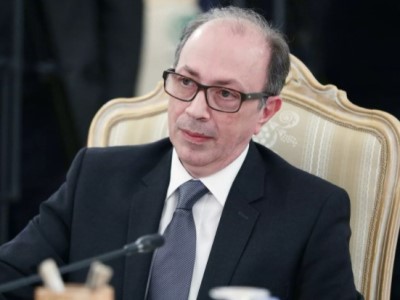
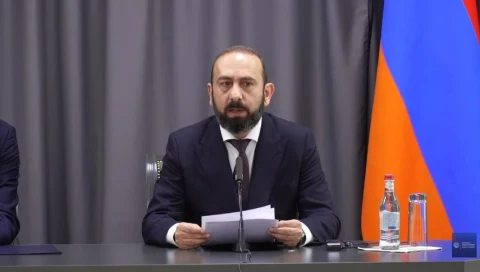
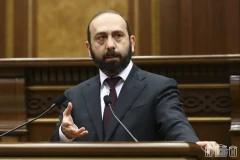
The November 9 trilateral statement is aimed at a ceasefire and ending hostilities in the Nagorno-Karabakh [(Artsakh)] conflict zone, as well as the deployment of Russian peacekeepers in Karabakh. Armenia’s Foreign Minister Ara Aivazian stated this in an interview with RIA Novosti.
"This statement, in fact, outlines the current situation at the time of its adoption—with the understanding that the issue of the final political settlement of the Nagorno-Karabakh conflict has not been resolved. We assume that only through negotiations can a solution be reached that takes into account the rights of all and will bring peace and stability to the South Caucasus. And such a settlement must be based first of all on the determination of the status of Artsakh (Nagorno-Karabakh).
The essence of the Nagorno-Karabakh conflict is the issue of the right of the people of Artsakh to self-determination. That right cannot be suppressed or frozen by force. Armenia has stood and will continue to stand for the recognition of the people of Artsakh’s right to self-determination and security. Artsakh cannot be under the jurisdiction of Azerbaijan under any status and under any circumstances. The recent aggression once again confirmed that Artsakh within Azerbaijan will mean Artsakh without Armenians. We all remember the ethnic cleansing organized in the late [19]80s and early [19]90s in major Azerbaijani cities that had no direct connection to Nagorno-Karabakh.
February 27 marks the 33rd anniversary of the pogrom of the Armenian population in Sumgait—with the participation of the Azerbaijani authorities. The events in Sumgait and the subsequent pogroms in Baku under the slogan ‘Glory to the Heroes of Sumgait,’ as well as the war crimes and atrocities committed by the Azerbaijani army during the [recent] 44-day war in the occupied territories of Artsakh, particularly in the Hadrut region, are apparent evidence of the fact that only the exercising of the right to self-determination can ensure the life and security of the Armenian population in its own historical homeland.
Regarding the [Karabakh conflict] settlement format, we [the Armenian party to the conflict] have repeatedly stated that the OSCE Minsk Group co-chairmanship is the only format with an international mandate, within the framework of which a final political solution to the conflict must be reached. Our position in this regard is unchanged. The key issues of a peaceful settlement are not resolved as of now. This fully coincides with the view of the OSCE Minsk Group Co-Chair countries, which was clearly stated in the December 3, 2020 statement, too.
The [Azerbaijani] aggression against Artsakh, the use of force as a method of resolving the conflict is a challenge to the entire international community, which also undermines the mediation efforts and prestige of the [OSCE Minsk Group] co-chair countries, which are permanent members of the UN Security Council. We really hope that the co-chairs will practically confirm their mandate and effectively lead the peace process.
As for Armenia's recognition of Artsakh as an independent state, Yerevan remains committed to the negotiation process. The very issue of resumption of the peace process is on our agenda today, as a result of which it will be possible to ensure long-term security and stability in our region," the Armenian FM added.