make preferable
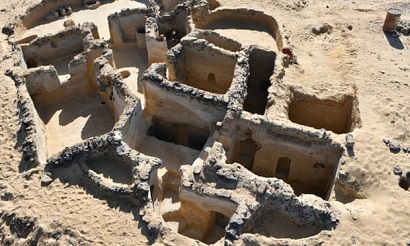
A French-Norwegian archaeological team has discovered new Christian ruins in Egypt’s Western Desert, revealing monastic life in the region in the fifth century AD, the Egyptian antiquities ministry said, The Guardian reported.
“The French-Norwegian mission discovered during its third excavation campaign at the site of Tal Ganoub Qasr al-Agouz in the Bahariya Oasis several buildings made of basalt, others carved into the bedrock and some made of mud bricks,” it said in a statement on Saturday.
The complex is comprised of “six sectors containing the ruins of three churches and monks’ cells,” whose “walls bear graffiti and symbols with Coptic connotations”, said Osama Talaat, head of Islamic, Coptic and Jewish Antiquities at the ministry.
Mission head Victor Ghica said “19 structures and a church carved into the bedrock” were discovered in 2020, according to the statement.
The church walls were decorated with “religious inscriptions” and biblical passages in Greek, revealing “the nature of monastic life in the region”, Ghica said.
It clearly showed that monks were present there since the fifth century AD, he added.