make preferable
As coronavirus infections spread across Europe, thousands are protesting new quarantine restrictions and vaccination rules in several European capitals.
People are resisting vaccinations in some countries due in part to a lack of confidence in their governments. While some countries have introduced measures such as compulsory vaccinations, the tougher measures could work like a double-edged sword, provoking further resistance.
The effect has already been seen in several countries over the weekend, from violence in Vienna over mandatory vaccinations to riots in Rotterdam against a new impending quarantine.
Netherlands
Rotterdam Mayor Ahmed Aboutaleb condemned the orgy of violence at Friday's demonstrations, which injured seven people and more than 20 arrested.
Hundreds of protesters took to the streets to protest the new three-week partial isolation, plans to introduce a vaccination pass and a ban on New Year's fireworks.
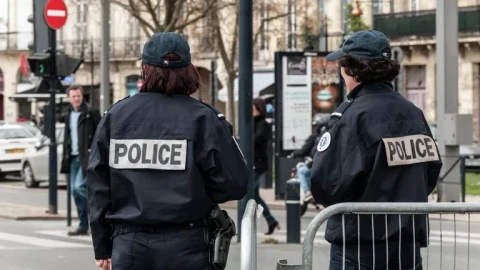
Protesters threw stones and fireworks at officers and set police cars on fire, while police responded by shooting and wounding at least two people.
The next night, thousands of people gathered in Amsterdam's central Dam Square, despite the organizers canceling the protest, hundreds also marched through the southern city of Breda.
Austria
After the number of daily deaths has tripled in recent weeks, Chancellor Alexander Schallenberg announced a new quarantine, which could last up to 20 days, starting Monday.
The government also said coronavirus vaccinations will become mandatory from February 1, as only 66% of the population has been vaccinated so far.
Some 35,000 protesters, many of whom belonged to far-right groups, marched through Vienna on Saturday with torches and “My body, my choice” banners lit to express their anger, while others burned medical face masks.
Police said several protesters were detained, but did not give exact numbers.
Switzerland
Coronavirus cases have also risen sharply in Switzerland, where about 65% of the population is now fully vaccinated, according to the country's Federal Office of Public Health.
On November 28, the country is also voting on the use of the Swiss Covid certificate, which may become mandatory to enter certain public places based on vaccination status or proof of a negative coronavirus test.
On Saturday, thousands of people filled the streets of Zurich and Lausanne to protest the policies, including the certificate.
Previous protests in the Swiss capital of Bern erupted into violence, but police said the weekend demonstrations were peaceful.
Croatia
The anti-vaccination sentiment is perhaps the strongest in Croatia, where only about 48.4% of the population have been vaccinated against the coronavirus and infections have skyrocketed in recent weeks.
Although the country is not closed, masks are mandatory in all indoor public places and outdoors where the 1.5 meter social distancing principles cannot be respected.
On Saturday, thousands of people gathered in the capital Zagreb with posters against vaccinations and what they call restricting people's freedoms.