make preferable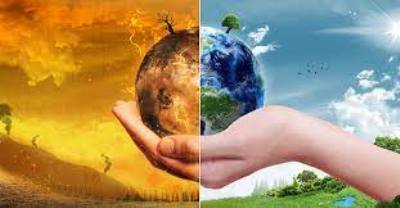
A group of leading climate scientists have called for more research into worst-case climate change scenarios, which they call climate endgame.
In a new paper published in the Proceedings of the National Academy of Sciences, 11 researchers from around the world have presented a research agenda on the effects of global warming that reaches an upper bound of plausible scenarios of 3°C or more by the end of the century, Axios reports.
According to the paper, the worst-case scenarios have not been sufficiently explored by organizations such as the UN IPCC due to the focus on the goals of the Paris Agreement, as well as due to the inherent caution of climatologists.
The article, which is not a study but a detailed research proposal, reads: "There are enough reasons to suspect that climate change could lead to a global catastrophe."
The authors, including Hans Joachim Schellnhuber, a physicist who advised German Chancellor Angela Merkel on climate science, and renowned researcher Johan Rockström, believe that such a study could spur society to act with urgency.
The paper notes that if all countries meet their non-binding long-term commitments to reduce emissions, it could limit warming to 2.1°C above pre-industrial levels by 2100.
The authors warn that even this optimistic scenario would make the planet warmer than any other point observed in more than 2.6 million years.
The paper addes how the COVID-19 pandemic has exposed the risks of infrequent global events with significant consequences that are having a domino effect across the global economy.
The researchers argue that the uncertainty associated with catastrophic risks could have specific policy implications. The paper provides an overview of the likely ways in which climate change could tilt societies towards more dangerous, if not catastrophic, consequences, from destabilizing the most vulnerable countries to creating physical and political "risk cascades" that could sweep across the world.
"We are not saying that we are all doomed," lead author Luke Kemp, of the University of Cambridge, told Axios via email.
"This isn’t about disaster voyeurism; it is about understanding plausible catastrophic risks so we can prevent them," he said. "The greater the understanding of potential catastrophic risks, the better the potential for developing effective risk reduction strategies," study coauthor Kristie Ebi, a professor at the University of Washington, told Axios via email.