make preferable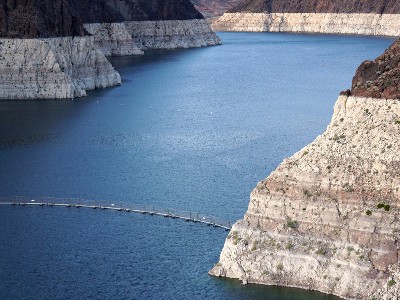
The UN has warned that water levels in the two largest reservoirs in the US have dropped to "dangerously low levels" due to the effects of climate change, The Hill reported.
The situation has become so serious that these reservoirs, Lakes Mead and Powell, are on the verge of reaching dead center status when water levels fall so low that downstream flow ceases. Without such a flow, hydroelectric power plants will stop working, jeopardizing the power supply of millions of people in the region.
“The conditions in the American West, which we’re seeing around the Colorado River basin, have been so dry for more than 20 years that we’re no longer speaking of a drought,” said Lis Mullin Bernhardt, an ecosystems expert at UNEP. “We refer to it as ‘aridification’ — a new very dry normal,” Bernhardt added.
The Colorado River system provides water to more than 40 million people and irrigates about 5.7 million acres of farmland. The system serves seven states - Colorado, New Mexico, Utah, Wyoming, Arizona, Nevada and California, as well as Mexico.
Scientists have already calculated that Lakes Mead and Powell, fed by the river, will drop to 25 percent of their capacity by the end of this year.
Meanwhile, only about 10 percent of the Colorado River's natural flow, which has deviated greatly from its 1,400-mile course throughout history, now reaches Mexico.
As the western water crisis continues to deepen, water cuts will be introduced across the region, but experts warn these actions may not be enough, UNEP said.
“While regulating and managing water supply and demand are essential in both the short and long term, climate change is at the heart of this issue,” Maria Morgado, UNEP’s ecosystems officer in North America, said in a statement. “In the long term we need to address the root causes of climate change as well as water demands,” Morgado added.