make preferable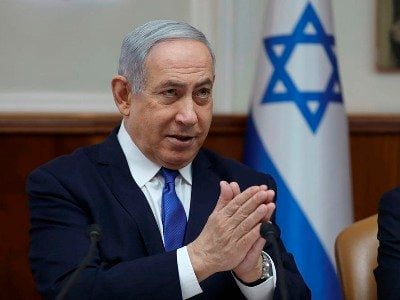
Israeli Prime Minister Benjamin Netanyahu discussed steps to achieve a breakthrough in relations with Saudi Arabia in wide-ranging talks with U.S. National Security Adviser Jake Sullivan in Jerusalem, The Hill writes.
He said diplomatic relations with Riyadh were discussed as part of the next steps to deepen the Abrahamic agreements brokered by the former Trump administration.
National security spokeswoman Adrienne Watson reported that Sullivan emphasized President Biden's commitment to working together with Israel, the UAE and Bahrain and "promoting a more integrated, prosperous and secure Middle East region for the benefit of all its residents."
Earlier in January, officials from the U.S., Emirates, Bahrain and Israel held the second meeting of the Negev Forum Working Group in Abu Dhabi, which was created by the Biden administration but is a result of the Abraham Accords.
Riyadh refrained from joining the accords because of Saudi King Salman's concerns about the lack of progress toward a Palestinian state.
Saudi Foreign Minister Prince Faisal bin Farhan echoed this view, telling Bloomberg TV that normalizing relations with Israel and real stability are only possible when we give the Palestinians hope and dignity. To do that we have to give the Palestinians a state, and that is the priority.
The Israelis and Saudis have maintained secret security ties for years, mostly to fight Iran, and Riyadh has taken small steps to draw public attention to these ties.
Saudi Arabia allowed President Biden to fly from Tel Aviv to Jeddah during a visit in July. The kingdom has also agreed to allow Israeli commercial flights to pass through its airspace.
Although the Biden administration made no effort to bring peace between Israelis and Palestinians, it supported a two-state solution to the conflict and reengaged with the Palestinian Authority in Ramallah after the Palestinians severed relations with the United States in response to the former Trump administration.
Sullivan, who was in the region for three days, also met with Palestinian President Mahmoud Abbas in Ramallah to reiterate the U.S. administration's interest in strengthening engagement with the Palestinian Authority and deepening ties with the Palestinian people. He also discussed the need for Palestinian leaders to help reduce tensions in the West Bank and strengthen Palestinian institutions.
Sullivan, in his meeting with Netanyahu, reiterated support for the two-state solution and disapproved of policies that jeopardize its viability.
The security of the holy site is controlled by the Jordanians as part of a delicate status quo that largely prohibits Jews from visiting the site and praying there. Ben-Gvir's visit was seen as a provocation.