make preferable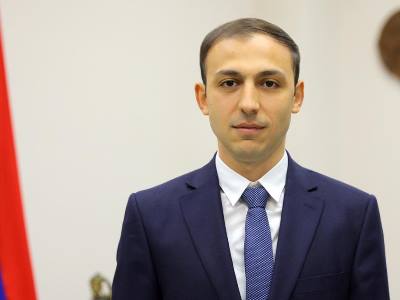
By and large, there is no change in the situation in Artsakh (Nagorno-Karabakh) after the establishment of a checkpoint on the Hakari bridge by Azerbaijan because the closure of the corridor did not occur yesterday, the blockade of Artsakh has been going on for 4.5 months. Artsakh Human Rights Defender (ombudsman) Gegham Stepanyan stated this in an interview with Armenian News-NEWS.am.
"That is, the humanitarian problems that exist as a result of the blockade have not undergone any changes yet after the checkpoint was installed. The question is that with the installation of the checkpoint, Azerbaijan will presumably tighten the blocking, blockade. I believe that there will be actions by Azerbaijan to hinder as well the process of transporting humanitarian goods through the Russian peacekeepers and the International Committee of the Red Cross. As of now, there is no such information from those bodies, but we have to take into account that the installation of the checkpoint is not yet completely finished, as of now, the Azerbaijani side continues the work of the construction of the checkpoint," said Stepanyan.
As for the Shushi regions’ Hin Shen, Mets Shen, and Yegtsahogh villages which had some link to Armenia, Stepanyan said that during this period those villages did not have uninhibited communication with Armenia, and humanitarian goods were delivered to them through the Russian peacekeepers and the Red Cross.
"At the moment, it turns out that these communities are in a state of bilateral isolation, there is no link to [Artsakh capital] Stepanakert, there is no link to Armenia either," he emphasized.
To the question of what Azerbaijan's goal is, the Artsakh ombudsman answered: "Setting up the checkpoint was an exposure of Azerbaijan's hidden plans. They started with ‘environmental’ actions. But seeing that the people of Artsakh are not going to leave their homeland in any way, Azerbaijan takes an openly brazen step that directly contradicts the tripartite statement by placing a checkpoint at the beginning of the [Lachin] corridor.
"It has been discussed many times what the goals of Azerbaijan are. And I can add one thing in this regard, that my contacts with various international officials, representatives of various organizations during this period have created my impression that if in the past, when they announced, submitted evidence and arguments that Azerbaijan, with all its actions, seeks to carry out [Armenian] ethnic cleansing in Artsakh, very often there was a certain skepticism or suspicion towards my words or our positions in general or such an approach as if we were exacerbating the situation. But the blockade formed a clear belief also among those persons and various players that, yes, these actions aim to subject Artsakh to ethnic cleansing. And this is what the president of Azerbaijan openly stated in his statements, during various interviews, and this belief is really formed among international players as well.
"However, the biggest problem and the most painful question is that even having such a belief and even imagining the situation realistically, the gap from words to taking action has not yet been overcome among international players. And I really feel pain that people who talk about the protection of human rights on various platforms, and even today probably condemned and remembered the memory of the victims of the Armenian Genocide, do not do anything to prevent new genocides and to prevent the crisis that plagued the Armenian people and the catastrophic situation."
Since April 23, Azerbaijan has closed the Hakari bridge on the Armenia-Artsakh alternative road, and then officially announced the installation of a checkpoint there.