Preferred
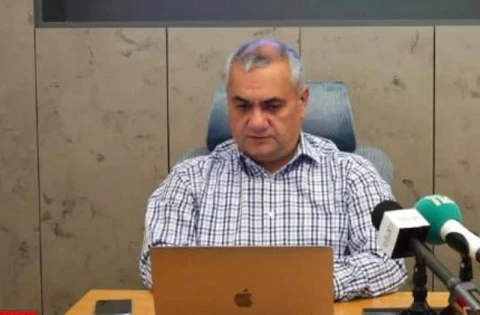
The situation in the Lachin corridor speaks of the crisis of the international legal order. Armenian Prime Minister Nikol Pashinyan said this in an interview with the Italian La Repubblica newspaper, responding to the reporter's question as to whether "these movements of Armenian going out from Nagorno-Karabakh are the start of the end of the Armenian presence in this region."
"At this point of time, our situation is as follows: a certain number of people who have medical conditions are moved to Armenia with the help of the Red Cross, and a certain number of citizens, mostly students, who study in Armenia, have moved to Armenia through the Russian peacekeepers," Pashinyan said.
According to Pashinyan, there is a more serious problem preceding it. "Here is the serious problem: Because of the closure of the Lachin Corridor, about 5 thousand of the population of Nagorno-Karabakh cannot return there and about 30 thousand inhabitants also cannot return since December. This group includes individuals who during the war of 2020 left their settlements because they ended up under Azerbaijani control. But the problem of those people should have been resolved. The-jure it is resolved, de-facto it isn’t, because clause 7 of the November 9, 2020 tripartite statement stipulates that internally displaced and refugees shall return to the territory of Nagorno-Karabakh and adjacent regions. This category includes almost several dozen thousands of Armenians who are de-facto deprived of this opportunity," he added.
According to the Armenian PM, Azerbaijan's goal is to rid Nagorno-Karabakh of Armenians, and this is the reason why they have created an artificial humanitarian crisis by unlawfully blocking the Lachin corridor.
"Essentially, the Lachin corridor issue should have been resolved, you may know that the International Court of Justice has made a binding legal ruling imposing it upon Azerbaijan to ensure bilateral traffic from Nagorno-Karabakh to Armenia and from Armenia to Nagorno-Karabakh for citizens, vehicles and freight. But this ruling was passed on February 22, 2023 and was reaffirmed on July 6, 2023 is not being followed. This comes to prove following the humanitarian crisis in Nagorno-Karabakh that, if we can say so, this is a crisis of the international legal order, if a binding ruling of the ICJ [(International Court of Justice)] is not being implemented, such a conclusion may follow," said Pashinyan.