make preferable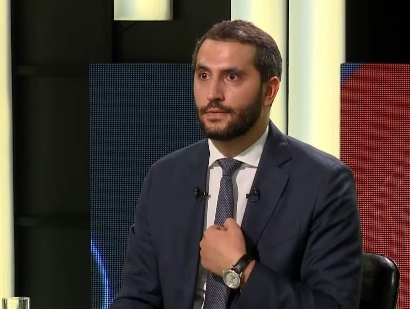
In general, there is no logic in the claim that Armenia is an anti-Russian tool; there is no evidence of this. Ruben Rubinyan, deputy speaker of the National Assembly of Armenia, who is also the representative of Armenia in the talks with Turkey to normalize bilateral relations, stated this on the air of the Public Television of Armenia.
He emphasized that Armenia has always kept itself out of geopolitical conflicts, both before and after 2018.
According to Rubinyan, Armenia has always fulfilled all its alliance obligations.
He dismissed the claim that Armenia preferred the EU monitoring mission to the respective CSTO mission.
"It is a false claim because the decision regarding the arrival [in Armenia] of EU monitors was made in Prague in October 2022; at that time there was no subject of CSTO peacekeepers [coming to Armenia]. Before that, a short-term mission had come and gone; that is, we were never faced with a choice. The CSTO mission was not rejected. Armenia is a CSTO member, when there was an attack on Armenia, Armenia rightly expected two things, that it will be specified that there was an attack on the sovereign territory of Armenia [by Azerbaijan], it will be condemned, and it would be good if there would be assistance. None of the three points I mentioned happened," Rubinyan said.
Turning to the claims that the Prague meeting should have been canceled, Rubinyan responded as follows: "What happened during the Prague meeting that should be cancelled? The Russian foreign ministry had claimed that as if the illegal blockade of the Lachine corridor is the result of an agreement made in Prague; and the [Armenian] opposition says the same. After the Azerbaijani attack on the sovereign territory of Armenia took place in September, which was not condemned by the CSTO, after that the prime minister of Armenia and the president of Azerbaijan did only one thing in Prague, which is not a new thing; they reaffirmed that the parties recognize each other's territorial integrity based on the Alma-Ata declaration of 1991. According to that declaration, the borders of the former Soviet republic become interstate. On November 9, 2020, when that [trilateral] statement was being signed, which was not addressing the status or affiliation of Nagorno-Karabakh, which assumed that the Lachin corridor should be under [the control of the] Russian peacekeepers, at the time when it was being signed, the Alma-Ata declaration was in force for all."
Also, Ruben Rubinyan dismissed the remark that Armenia-Russia relations are broken.
"I can claim that we have a number of disagreements with the fact that we [i.e. Armenia] have not been given enough support in various episodes," he said.