Preferred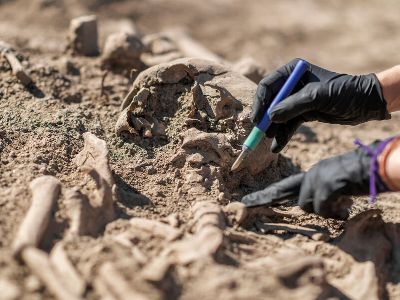
An international team of researchers from Germany, Colombia, the Netherlands, and several other countries has discovered traces of an unknown civilization on the Altiplano plateau of Colombia—and which existed 6,000 years ago. The findings were published in the scientific journal Science Advances.
The team studied the DNA of 21 ancient skeletons. The analysis showed that while one group was settled in the aforesaid Colombian region around 6,000 years ago, a different community, with completely separate genetics, called the area home starting about 2,000 years ago.
This later group also represents a cultural shift, from the hunter-gatherers of the original population, to people who were skilled in pottery-making and more sophisticated types of agriculture. It seems that these people stayed in place until settlers from Europe started arriving in the 16th century.
"That genetic traces of the original population disappear completely is unusual, especially in South America," says geneticist Andrea Casas-Vargas, from the National University of Colombia.
The research offers some valuable insight also into the history of South America and some of the earliest people to venture down from the north.
Earlier studies have suggested that the story of indigenous people in the region may be more complex than previously thought, and genetic links to South America have connected its people to places as far away as Australia.
The researchers are continuing their study to determine the reasons for the disappearance of this ancient population and the details of migration in this important region, which has served as a bridge between North and South America.