make preferable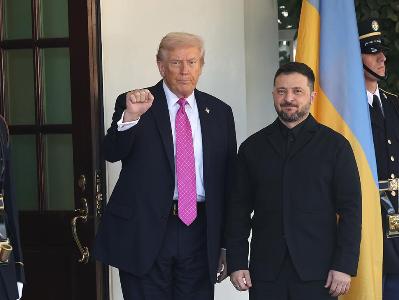
U.S. President Donald Trump made it clear to Ukrainian President Volodymyr Zelensky that he does not care where Ukraine’s new borders are drawn, as long as the country reaches a peace agreement with Russia, reports The Wall Street Journal. According to American officials, during the Washington meeting, the White House leader stated that he is not pursuing any specific territorial outcome; his primary priority is ending the war. Trump also informed Zelensky that Ukraine should not rely on long-range “Tomahawk” missiles in the near future.
Sources told the newspaper that Moscow and Kyiv are still far from ending the war, and territorial issues remain central to negotiations, with the fate of Donbas being the primary concern. During a recent phone call with Trump, Russian President Vladimir Putin again demanded that Ukraine hand over the remaining 22% of Donetsk Oblast under a ceasefire, while Ukraine and European partners firmly rejected such concessions. Kyiv noted that this would violate the Constitution and warned that Moscow, if granted the entire region, would use it as a base for further incursions.
WSJ sources indicated that in Friday’s meeting with Zelensky, Trump was blunt, refusing to look at maps of military operations and stating that regaining Donbas is not a priority for Ukraine, noting that Russia already controls most of the region—about 78%. Officials said the U.S. president emphasized that he is focused on a swift resolution of the war and is not concerned about who ends up with what. “They just need to stop where they are. The rest is very hard to agree on,” he said on Sunday during a Fox News appearance.
Speaking to reporters, Trump admitted that ending the war between Russia and Ukraine has proven far more complicated than he expected. “It’s unpleasant because you have two leaders who truly hate each other,” he said, referring to Zelensky and Putin.
Trump warned that if peace between Russia and Ukraine is not achieved, “many will pay a heavy price.” Zelensky defended his call to halt frontline fighting first and negotiate a final peace afterward. In response, the Kremlin stated that Russia is still opposed to freezing military operations because it “wants to achieve its goals, which are well known to all.”