make preferable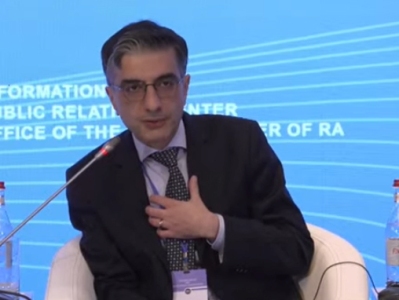
I believe that Armenia, Azerbaijan, and Turkey are coordinating their relations. Azerbaijani political scientist Zaur Shiriyev, a nonresident scholar at the Carnegie Russia Eurasia Center in Berlin, on Tuesday stated this during the international Orbeli Forum being held in Yerevan, the capital of Armenia.
He recalled that discussions are ongoing between Armenia and Azerbaijan, as well as between Azerbaijan and Turkey, suggesting that this be viewed in a “triple” format. “This is a parallel process, so I would not use the phrase ‘Azerbaijani pressure’ in the context of Turkish-Azerbaijani relations. There is no such rhetoric in the relations between the two countries,” Shiriyev said.
He assured that Turkey supports the normalization of relations between Armenia and Azerbaijan and is awaiting the signing of a peace agreement. According to him, Azerbaijan’s decision to lift the blockade on cargo transport through its territory from Central Asia to Armenia will improve discussions between Armenia and Turkey, which will also consider practical steps.
“When it comes to the peace agreement, its perception must be changed; one should not speak from maximalist positions, should not create exaggerated or diminished expectations, and must be realistic. In everyday life, we may not like all neighbors, but we appeal to them for help and provide support. A change in mindset is necessary,” Shiriyev added.
He noted that mutual visits can contribute to normalizing of relations between Armenian and Azerbaijani societies, while expert groups can help their governments create a roadmap for the future, better gauge public sentiment, and respond to their concerns.
“In turn, journalists could regulate rhetoric within the media space of both countries. Governments don’t control everything, and societies have their own opinions. This also applies to Azerbaijan, where both positive and negative assessments of the peace process with Armenia are expressed. The conflict has a history, people carry trauma, the memory is alive, and we cannot consign it to oblivion. Therefore, people may also express negative opinions,” he added.
Shiriyev assured that the Azerbaijani government speaks of a peace that implies respect for international law, mutual respect for each other’s territorial integrity, and the absence of war. “The position of the Azerbaijani authorities is based on this. So, the opinion of individual people in Armenia or Azerbaijan should not be presented as the position of the states,” Shiriyev added.
He positively assessed the policies of the Armenian authorities, noting that it will take a long time for the agenda to be fully oriented toward peace in both Armenia and Azerbaijan. “The peace agreement is only the first step. The same applies to the opening of the Armenian-Turkish border. This should not be the ultimate goal; it is necessary to establish connections between societies,” the Azerbaijani political scientist concluded.