make preferable
Zhoghovurd daily of the Republic of Armenia (RA) writes as follows: Although the official pre-election campaign for the national [parliamentary] elections will start on May 8 and will last until June 5, the political processes are actually already in an active phase.
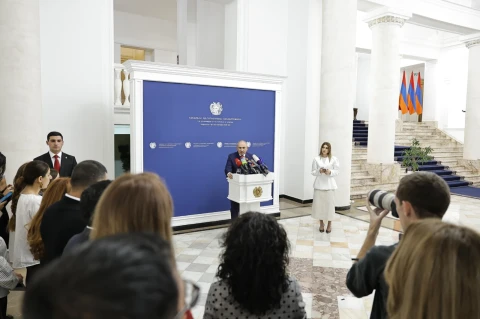
In recent days, representatives of the [ruling] Civil Contract [(CC)] party, led by [PM] Nikol Pashinyan, have been holding meetings with citizens in different parts of Yerevan, with the participation of ministers and other officials. During the meetings, citizens' problems are raised, instructions are given, possible solutions are discussed, which creates the impression of an early campaign in the public perception.
The question arises whether such activity can be considered as pre-election campaigning or the use of administrative resources, especially in cases where representatives of the state administration system are involved in the process. ArmLur.am petitioned to the RA Central Electoral Commission [(CEC)] to get a clarification.
The CEC responded: “We oversee exclusively the pre-election campaign period. It is customary to consider it a period of restrictions, because there are certain functions that are limited by law. For example, during that period, political forces submit their financial reports to our oversight-inspection service, as well as on June 6, the day before the vote, campaigning is not allowed.
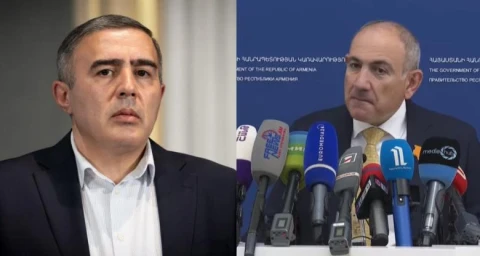
That is why we call the pre-election campaign period a period of restrictions. During the rest of the period, any party or political unit is free to carry out its activities, and this has nothing to do with the CEC in any way.” This position of the CEC chairman, and more specifically, a former MP of the CC [parliamentary] faction, Vahagn Hovakimyan, actually shows that until the official start of the campaign, political activity is not subject to the oversight mechanisms that are applied during the pre-election phase.
At the same time, when public officials participate in public meetings and recommendations are made on the issues raised on the spot, the question arises whether equal competitive conditions are ensured for all political forces. From the point of view of trust in electoral processes, it is important not only to maintain legal restrictions, but also to exclude the possible use of administrative resources. Experts have repeatedly emphasized that the participation of persons holding public office in political processes should be clearly separated from their official powers so that suspicions of unequal competition are ruled out.
Under these conditions, a situation is formed when the campaign has not yet begun in legal terms, but the political process is in fact already in progress, without the oversight tools that operate during the official [campaign] period. As a result, questions about the use of administrative resources continue to exist.