make preferable
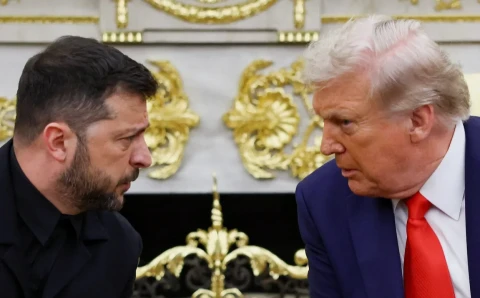
The war with Iran has flared up again. Almost daily, the United States attacks the military infrastructure of the Tehran regime. The consequences of this decision are different for President Donald Trump and Vice President J.D. Vance. But one thing is clear: it is not popular with the American people. The government has still failed to convince the public of the correctness of its actions. Bild writes about this.
“Vance lost the battle within the administration — and yet still wants to win in terms of his public image. Numerous reports have emerged, including in Politico, about his resistance to the U.S. military operation against Iran. In the end, he was unable to prevail.
But the way Vance is handling this defeat is remarkable. His team believes that politically this situation can be turned to their advantage — precisely because he was the one insisting on peace. He made himself the person who ‘sold’ the American people the declaration of [peaceful] intentions between the United States and Iran. And even if this declaration of intent ultimately fails, people from his inner circle say: for Vance, that does not matter. The image is what matters — the image of a vice president whom the public and the whole world perceive as a man who wants to end this war.
In President Trump’s case, the situation is different. He will no longer fight for another term, and he understands this perfectly well. In my conversations this year with sources in the White House on a wide range of topics, one pattern kept emerging: Trump is far more concerned about his legacy than about his current approval ratings.
In Iran’s case, this means he wanted to exit the conflict. Everyone hoped that the declaration of intentions between the United States and Iran could become the first step toward peace. The problem is that the president overestimated how reliable this declaration actually was. Even some Trump supporters are not convinced that the United States should respond militarily when Iran opens fire. Trump and his team, by contrast, believe there are no other options left.
And this is precisely where the real problem lies: none of my interlocutors in the White House or its circle has a clear idea of how all this is supposed to end. It is President Trump who determines the course. He has a team that takes part in the discussion, but it is a very, very narrow circle. In the end, he decides. This is what makes this conflict what it is: a deeply ‘Trumpist’ conflict whose outcome and next step remain completely open,” Bild writes.