make preferable
The Iranian government is unlikely to feel any significant impact or soften its position in negotiations as a result of new waves of U.S. military strikes like those being carried out now. That is the conclusion reached by U.S. intelligence in a new analytical document, the Washington Post writes.
U.S. intelligence analysts also concluded that Tehran and Washington are currently stuck in a state of uncertainty between peace and war — an extremely unstable dynamic amid the growing lethality of mutual strikes.
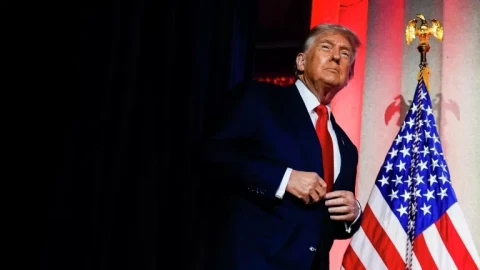
The intelligence findings presented to the administration underscore the dilemma facing President Donald Trump in the war he and Israeli Prime Minister Benjamin Netanyahu launched in late February.
Trump’s current course of continually expanding the scale of the attacks is leading to a stalemate. But given the war’s high unpopularity within the United States, any further escalation — for example, a possible deployment of ground troops — poses serious political risks for the president without any guarantees of military success.
...On another front of the Middle East conflict, Yemen’s Iran-backed Houthi group announced its intention to impose a naval blockade on Saudi Arabia, threatening shipping in the Bab el-Mandeb Strait — a key artery between the Arabian Peninsula and Africa leading to the Suez Canal.
Back-channel diplomacy and internal divisions
Amid the threat of a broader war, Iran and the United States have signaled readiness for new talks, although no real progress has been reported.
Iranian Foreign Ministry spokesman Esmail Baghaei said at a press conference in Tehran that signals from Washington are being transmitted through mediators in Qatar:
“Without going into details, we confirm that the diplomatic apparatus is active, and certain intermediaries are conveying ideas to us,” Iranian media quoted Baghaei as saying.
U.S. Secretary of State Marco Rubio said Washington remains open to a diplomatic solution, and that part of the Iranian leadership supports such an approach, but Iranian “hawks” are standing in the way.
“They continue to send signals that they want to negotiate, but we respond to their actions. And their actions are the launching of missiles and drones at ships, including last night,” Rubio told reporters before departing for the Philippines.
In previous rounds of talks, the Iranians proved to be tough negotiators, especially on the nuclear program. For its part, the U.S. administration regularly claimed that Iran had “capitulated” to American demands, which Tehran denied each time.
The sides had already reached a ceasefire agreement in April to unblock the Strait of Hormuz and postpone disputed issues, but the deal quickly collapsed because of the struggle for control over this key Persian Gulf oil export chokepoint.
CIA analysis: the regime will endure
The latest intelligence report was prepared primarily by the CIA. Agency analysts emphasize the Tehran regime’s strong stockpiling capacity and resilience, noting that it remains governable despite the loss of key commanders and military equipment as a result of U.S. and Israeli strikes. As early as May, the CIA concluded that Iran would be able to withstand a U.S. naval blockade for at least 3–4 months before facing critical economic difficulties.
Jonathan Panikoff, former U.S. deputy national intelligence officer for the Middle East, noted that the Trump administration appears to believe that intensifying military strikes will force Tehran to become more accommodating.
“That assessment is almost certainly wrong,” Panikoff, now an expert at the Atlantic Council, emphasized. “The Iranian government’s top priority is regime survival. They are prepared to endure the most severe strikes, regardless of the damage to the economy and the population. I don’t see good options for the United States. Trump is unlikely to launch a ground operation, so what lies ahead is a series of escalations, lulls, and new outbreaks of fighting.”
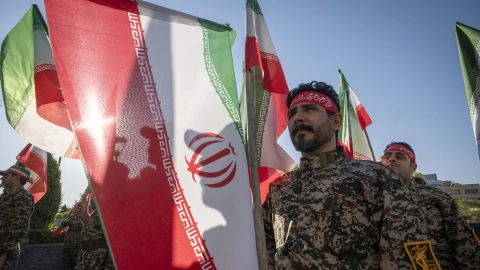
Within the Iranian leadership, U.S. intelligence is detecting growing tension between the so-called “pragmatists” and the radical wing — above all the Islamic Revolutionary Guard Corps (IRGC), whose influence has grown substantially.
In public statements, Supreme Leader Mojtaba Khamenei and Iran’s chief negotiator Mohammad Bagher Ghalibaf called on the nation to unite as a “necessary condition for victory in the struggle against the enemy.”