make preferable
Here's the English translation:
We Have Every Basis to Achieve a Positive Outcome at the ECHR — Siranush Sahakyan
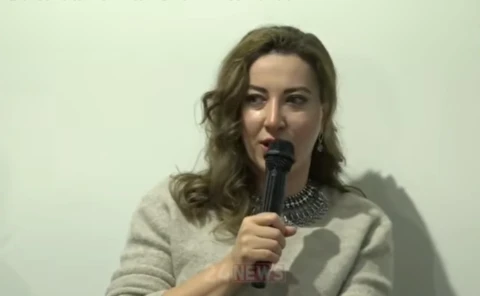
Interview with lawyer Siranush Sahakyan, head of the Center for International and Comparative Law, and representative of the interests of Armenian captives at the European Court of Human Rights (ECHR)
Ms. Sahakyan, we have learned that you have already filed an official complaint with the European Court of Human Rights (ECHR) regarding Ruben Vardanyan's case. Ruben Vardanyan had refused to appeal to the higher instance of the Azerbaijani judicial system, considering the continuation of the judicial farce meaningless, while the appeal in the case of the other fifteen Armenians is being reviewed and appears to be nearing completion. What expectations do we have?
In the case of the fifteen, it is predictable that the military court's verdict will be upheld. No court in Azerbaijan can serve as a mechanism for protecting the violated rights of ethnic Armenians, especially when dealing with any matter related to the Nagorno-Karabakh conflict.
As for Ruben Vardanyan's case, the complaint has already been submitted to the ECHR, since it is impossible to protect rights within a system that from the outset rejects justice and rights, and where the trial is a ceremony for carrying out the executive branch's political decisions. Through the family, we gained access to the verdict, which was translated into English and submitted along with the relevant documents. We expect that the ECHR, in accordance with its procedures, will proceed with the complaint.
So this is the first time you've had the opportunity to review the verdict in its entirety, is that right?
Yes. And after that, it immediately became clear why the sessions were held behind closed doors, without the participation of international observers and international media representatives. Having reviewed the verdict, it is obvious that during the more than one-year preliminary investigation and the one-year trial, they actually failed to find any reasoning even remotely close to logical for the "charges" they themselves had invented. We are dealing with an unprofessional, fragmented document that cannot withstand any professional criticism whatsoever, called a "verdict," on the basis of which our compatriots are, in essence, being held as illegal hostages in that country.
In your statement, you mentioned that you filed complaints regarding eight articles of the European Convention on Human Rights. Which articles are these?
The violations concern the fundamental provisions of the Convention. First and foremost, this concerns the right to a fair trial guaranteed by Article 6 of the Convention. Moreover, the violations concern all three points of this article. The violation of this article alone already casts doubt on the entire judicial process and the legality of the verdicts rendered. Violations of certain other rights were also raised in the context of the prohibition of discrimination and the prohibition of restricting rights for political motives.
You mentioned that, according to the "verdict," Ruben Vardanyan was found "guilty" on 41 counts under 21 articles of Azerbaijan's Criminal Code.
In reality, the "verdict" did not substantiate Vardanyan's individual guilt with facts or evidence.
Instead, the court concluded that the "criminal community" — Artsakh's unrecognized administration — had operated in Nagorno-Karabakh since 1988, and that Vardanyan joined this community in December 2020, even though at that time he was living in Moscow.
The court concluded that his subsequent support for Artsakh's state institutions made him responsible for all "crimes" attributed to this "community."
The "verdict," among other things, mentions murders, alleged victims of attempted murder, displaced persons, forced disappearances, detained persons allegedly subjected to torture, and hostages — while it turns out that these alleged incidents took place many years before Vardanyan held any state position or resided in Artsakh, and had no connection to him whatsoever.
The actions more directly linked to Ruben Vardanyan mainly concerned his service as State Minister of Artsakh from November 2022 to February 2023, as well as his activities from May to September 2023.
The court characterized Vardanyan's assumption of the position as "violent seizure of power," his commercial and charitable activities as "illegal entrepreneurship and financing of terrorism," and his entry into Nagorno-Karabakh via the Lachin Corridor as "illegal crossing" of Azerbaijan's state border.
At the same time, the verdict does not cite any specific order given by Vardanyan to kill, torture, displace, or attack the civilian population, nor does it confirm his personal participation in the incidents attributed to him.
Ms. Sahakyan, even if the ECHR grants the complaint, will Azerbaijan actually implement the ECHR's decision? Unfortunately, experience in recent years has shown the powerlessness of international institutions, since this same Azerbaijan has not implemented resolutions of either PACE or the European Parliament, has ignored numerous appeals, and has even disregarded decisions of the International Court of Justice.
And this attitude of Azerbaijan's does not in the least prevent EU leaders Ursula von der Leyen and Kaja Kallas from calling Azerbaijan's dictator an important partner.
Of course, it is painful to acknowledge that in the current situation, international law, fundamental human rights, and democratic values are being subordinated to geopolitical interests. But in my conviction, the legal dimension should not be underestimated, and even more so, one should not lose hope or stop fighting. I personally, as a lawyer, place great importance on international legal processes. I am confident that their results will not remain without consequence sooner or later, and I am more than convinced that we have every basis for achieving a positive outcome at the ECHR.