make preferable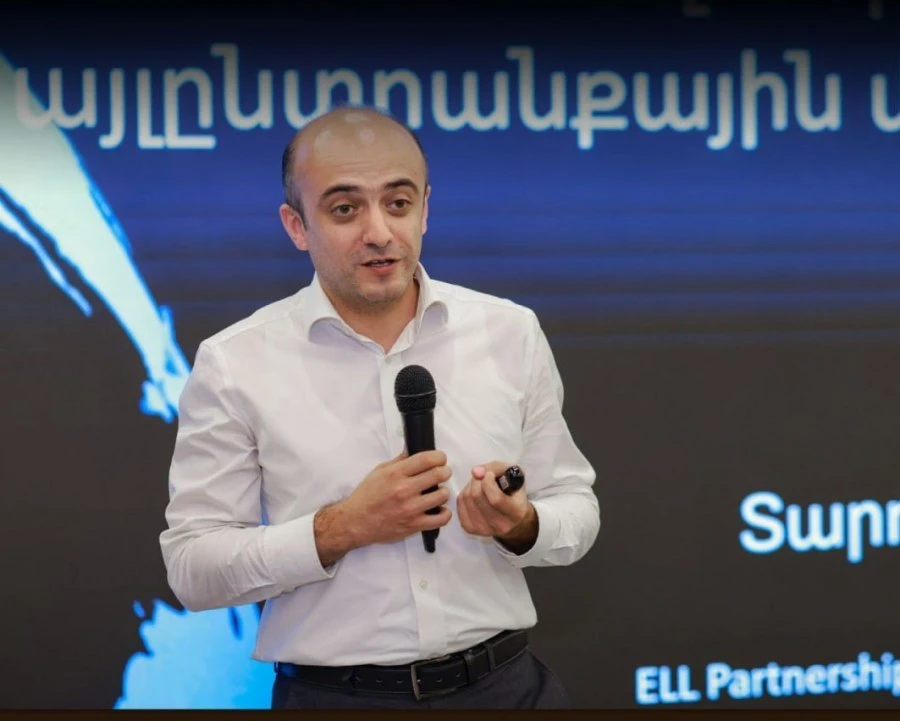
Siranush Sahakyan, representative of the interests of Armenian prisoners of war (POWs) and detainees before the European Court of Human Rights (ECtHR), recently announced that the English Translations of Ruben Vardanyan’s Indictment and Judgment have been published, calling on the legal community to examine the file. NEWS.am discussed this latest development with Taron Simonyan, specialist in international law and founding partner of the ELL Partnership Law Firm.
Mr. Simonyan, human rights defender Siranush Sahakyan recently announced that the English translations of Ruben Vardanyan's indictment and judgment, spanning a total of 3,302 pages, have been made public for the first time. Pointing out several absurdities, she urged legal professionals to examine the case. As an attorney specializing in international legal affairs, have you had the opportunity to review these documents?
As you mentioned, the dossier totals 3,302 pages. I am currently conducting a meticulous review, and a more comprehensive assessment will likely follow soon. However, the nature of what we are dealing with is already blatantly clear.
I could add an entire series of examples to the absurdities cited by Ms. Sahakyan — examples that reflect not merely absurdity, but gross negligence, incoherence, and utter professional incompetence.
For instance, at the very beginning of the judgment, Mr. Vardanyan is explicitly recorded as having "no prior criminal record." Yet, when imposing the sentence, the same court cites a provision of the Azerbaijani Criminal Code defining "recidivism" as an aggravating circumstance.
Furthermore, the verdict finds Mr. Vardanyan guilty under one specific article, but imposes a 14-year prison sentence under an entirely different article (Article 214-2), one that never appeared in the initial charges nor in the final list of convictions. Consequently, Mr. Vardanyan was deprived of any opportunity to defend himself against the charge for which he was ultimately sentenced.
Regarding the charge concerning aviation safety (Article 270-1.2), the court itself explicitly states in writing that the two-year statute of limitations for criminal prosecution has expired. Immediately following this acknowledgment, the court finds him guilty under that exact same article. The court officially declares that it lacked the legal authority to proceed with prosecution, yet it does so anyway and hands down a sentence.
The judgment also directly notes that Mr. Vardanyan "refused to testify and presented no evidence," subsequently treating this refusal as corroborating proof of his guilt. Refusing to testify is the constitutional right of any defendant, not evidence of guilt. The burden of proof rests entirely on the prosecution at all times.
In addition, Mr. Vardanyan was found guilty of actions and events spanning from 1988 to 2022, long before he assumed public office in the Republic of Artsakh. Such an illogical, retroactive application of law is virtually unimaginable. The first several hundred pages of the judgment describe alleged events during the First Nagorno-Karabakh War involving various Armenian individuals; the court then concludes that all these actions can be attributed to Mr. Vardanyan simply because he later joined the Republic of Artsakh, which Azerbaijan characterizes as an "illegal and terrorist organization funded by the Republic of Armenia." It is not difficult to discern where this logic leads: toward establishing the state liability of Armenia, a reality our own authorities seem reluctant to grasp.
Moreover, the September 2022 border hostilities resulting from Azerbaijan's aggression against Armenia took place on the sovereign territory of the Republic of Armenia along the interstate border, not in Artsakh. The judgment flips the narrative by portraying injuries sustained by Azerbaijani military personnel as "Armenian provocations" and incorporating them wholesale into Vardanyan's file, even though Vardanyan would not assume the post of State Minister of Artsakh until two months later, on November 4.
Another revealing episode involves witness statements. One witness states that a vehicle skidded into a mined zone due to rain, and another states that he slipped in the dark while carrying an ammunition crate and injured his hand. Neither incident has any connection to Mr. Vardanyan, yet both individuals are designated as "victims" in his case. A weather-related traffic accident and a stumble in the night fog are transformed into central prosecutorial evidence, demonstrating not the strength of the evidence, but the absurd breadth of the prosecution's scope.
Finally, charitable work is framed as the financing of terrorism. The Aurora Humanitarian Initiative is presented as an elaborate scheme for terror funding. In his pre-trial testimony, Mr. Vardanyan describes funding the reconstruction of schools and sponsoring weddings for hundreds of families in Artsakh. The judgment quotes these exact words as evidence of how "deeply integrated" he was into what Azerbaijan deems a "criminal enterprise."
These are merely a fraction of the absurd, illogical, unlawful, and unprofessional conclusions embedded in the judgment — conclusions that exist precisely because Azerbaijan feels entirely unconstrained in the complete absence of international legal and political pressure, as well as pressure from Armenia.
Judging by these facts, it appears there are solid grounds for the ECtHR to issue a favorable ruling.
From that perspective, a ruling against Azerbaijan at the ECtHR is unequivocally to be expected. Precedent shows that when even one percent of such egregious violations are present, the European Court finds a breach of the Convention.
Therefore, work in this direction must be pursued methodically. We should not be deterred by the fact that Azerbaijan has previously ignored ECtHR rulings regarding Artsakh, including interim and urgent measures. We must exert every effort to utilize the existing international legal framework and deploy every available mechanism of pressure so that at a certain juncture, which will inevitably come, we break Azerbaijan's resistance, put an end to the torture of Armenian prisoners, and secure their return from captivity in Baku.
In her recent press conference, Ms. Sahakyan highlighted numerous alarming violations, ranging from the detention conditions of Armenian POWs to procedural abuses. Strangely, the Azerbaijani Ombudsman chose to respond only to the religious aspect, denying that their Christian identity played any role and claiming there was "no evidence" to support it. Why do you think they reacted so sensitively to this particular point while ignoring the rest?
This ties back to my earlier point: accurate legal documentation, particularly when brought to light through international legal mechanisms, deeply irritates Azerbaijan. They realize that Azerbaijan's gross violations of international law and human rights will ultimately be exposed to the entire world, and the international community will no longer be able to turn a blind eye to the crimes of Azerbaijan's political and military leadership.
Within this framework, the religious dimension of the inhumane treatment inflicted on Armenian prisoners is well-documented in international reports, particularly by the United Nations and the Council of Europe, as well as in national reports. For instance, the United States Commission on International Religious Freedom (USCIRF) designated Azerbaijan as a "Country of Particular Concern" due to systematic, ongoing, and egregious violations of religious freedom. The report notes that, despite official assertions supporting religious tolerance, state authorities act quite to the contrary, engaging in torture, strictly controlling religious activity, expelling independent media and Red Cross representatives, and destroying religious heritage sites.
The report includes a dedicated section on Armenian detainees, noting that Armenian prisoners in Azerbaijan are denied religious materials, specifically Bibles, according to their families. A key excerpt reads: “The nearly two dozen Armenian Christian prisoners from Nagorno-Karabakh, who were tried behind closed doors without adequate legal counsel, have received beatings, psychological abuse, lack of access to medical care and proper food, denials of Bibles, and the erasure of cross tattoos through burning. Police are not held accountable for these actions.”
A rather strange, if not bizarre, situation has emerged regarding the Armenian POWs. The Armenian authorities refrain from addressing the issue publicly, claiming it remains a top priority under daily review and arguing that publicity would cause harm. Yet remarkably, Ruben Vardanyan’s wife, Veronika Zonabend, has spent nearly a month attempting to obtain contact information for the official responsible for prisoner affairs, to no avail.
If the issue of prisoners were truly a top priority for our government as they claim, officials would be in daily contact with the detainees' families as a matter of course. They would not wait for public letters from Ms. Zonabend before agreeing to meet her, only to remain unable to identify the designated official a month later. This speaks volumes about their actual attitude toward this "priority."
More broadly, discussing our authorities evokes deeply conflicting emotions. On one hand, it is difficult to accept that the leadership of one's own country, driven by internal fears or a peculiar moral compass, is pursuing policies that effectively mirror those of Azerbaijan while attempting to convince themselves and the public that this serves Armenian interests. On the other hand, one cannot ignore the stark reality at hand.
It makes one pause and reflect: by constitutional mandate, they are sworn to protect Armenian national interests, the Republic of Armenia, and its citizens. Yet, their conduct fails to demonstrate this responsibility. Instead, it displays the exact opposite. Consider, for example, the President of the Republic expressing gratitude and seemingly flattering Azerbaijani President Aliyev, the very leader whose state has occupied sovereign territories of Armenia and Artsakh, orchestrated another wave of ethnic cleansing resulting in depopulation, committed acts bearing the hallmarks of genocide, perpetrated war crimes and crimes against humanity, and continues to detain and torture Armenian citizens. It is baffling. This is not diplomacy. It risks becoming a practical manual for the degradation of a nation's dignity and moral collapse— a textbook example for future generations of how foreign policy should never be conducted.
Azerbaijan also exhibits a distinct strategy regarding information. Statements from various international bodies concerning Armenian POWs, including European Parliament resolutions, are routinely dismissed by Baku as attempts to "obstruct the peace process." As an international legal expert, how do you evaluate this behavior?
It is entirely expected. Azerbaijan will do everything in its power to compel Armenia to abandon every international legal instrument available to protect its national, state, and individual citizens' interests. They want Armenia to withdraw lawsuits seeking international court judgments that document Azerbaijani violations, to refrain from utilizing international resolutions highlighting human rights abuses, and to suppress evidence detailing ethnic cleansing and the destruction of Armenian cultural heritage. All of this will consistently be framed as an obstacle to "peace."
Turkey employs the exact same strategy by accusing both the Armenian Diaspora, as well as states that recognize the Armenian Genocide, of hindering the normalization of Armenian-Turkish relations.
The objective is clear: keep Armenia in a weakened state, stripped of any practical capacity to defend its interests, so that its dependency on the Turkish-Azerbaijani tandem continually increases until Armenian statehood and sovereignty cease to hold any practical meaning. This will naturally leave Armenia without the capacity, or even the will, to endure as Armenia.
Yet, we must remember: a slow death is not peace. A life without identity, character, or dignity is not peace. Flattering an adversary who has tortured and killed your children and loved ones is not a "clever" peace. Forgetting your brothers currently undergoing torture in pursuit of temporary comforts is not peace.
Real peace exists when you develop and multiply your potential, safeguard the rights of every member of your society, defend the national and state interest, and force your adversary to reckon with your readiness to fight for dignity, ultimately compelling them to accept peace on your terms.