make preferable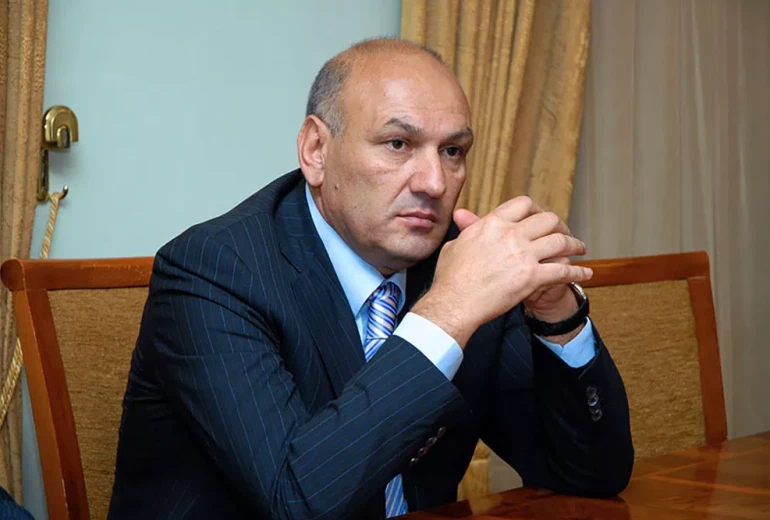
The decision to unlawfully detain Gagik Khachatryan, 71, former Minister of Finance and former Chairman of the State Revenue Committee of the Republic of Armenia, has still not been provided either to Khachatryan himself or to his defense team, 27 days after his detention. The defense team considers this to constitute a violation of the rights guaranteed under Article 5(1) and 5(4) of the European Convention on Human Rights (Right to liberty and security of person), Khachatryan’s defense team noted in a statement, which continues as follows:
“On 2 September 2026, the Anti-Corruption Court of Armenia ordered pre-trial detention for Gagik Khachatryan for a period of two months, granting the motion submitted by an investigator of the Investigative Committee of Armenia. In the motion, the investigator stated that Gagik Khachatryan, who suffers from severe spinal conditions and is unable even to walk independently, could evade the investigation, interfere with the criminal proceedings, or commit a new offense.
Although, 27 days after the hearing, the defense team has still not received the reasoning of the court decision imposing detention and therefore has not been able to examine it, it is evident that Gagik Khachatryan’s severe health condition, as established by the conclusions of numerous medical consultations, could not justify his detention, and even less so serve as a basis for concluding that, if left at liberty, Gagik Khachatryan could obstruct the investigation, evade the proceedings, or commit a new offense.
It should be noted that on 5 and 7 June 2026, the investigative body had also sought Gagik Khachatryan’s detention. On both occasions, however, the court rejected the motions. From 5 June until 2 September, Gagik Khachatryan made no attempt whatsoever to evade the proceedings, obstruct the investigation, or commit a new offense. Moreover, during this period he was engaged in efforts to stabilize his extremely serious health condition. This further demonstrates that the grounds cited in the motion were manifestly unfounded.
Ultimately, this is a case in which the person’s severe health condition is apparent on its face, requiring no additional documentation to establish it.
Gagik Khachatryan is currently being held at the ‘Yerevan-Kentron’ Penitentiary Institution, deprived of even the minimum conditions necessary for the protection of his health, including: the absence of essential conditions required for a person with a disability; despite references to various bureaucratic procedures, he has not been permitted to receive a medical examination by the doctor of his choice.
Against this background, we note that, by failing to provide the detention order, the court has already deprived Gagik Khachatryan, for 27 days, of the opportunity to exercise his right to lodge an appeal for special review.
Furthermore, a seeming legal crisis has arisen in Gagik Khachatryan’s case, since following the two-month detention order, Gagik Khachatryan and his defense lawyers have been unable to submit an appeal for special review and have consequently been effectively deprived of the exercise of this important right. This constitutes a violation of the rights guaranteed under Article 5(1) and 5(4) of the European Convention on Human Rights.
On behalf of Gagik Khachatryan, an application has been submitted to the European Court of Human Rights concerning the lawfulness of his arrests and detention, as well as the ineffectiveness of judicial review.
The application states that Gagik Khachatryan’s arrests were carried out arbitrarily and disproportionately, despite two emergency medical teams determining that his transportation was medically inadmissible and recording the need for hospitalization. He was forcibly removed from his bed and transported on a stretcher to the Investigative Committee, where his condition deteriorated. Nevertheless, this did not prevent the authorities from subsequently bringing him to court on a stretcher.
The application further states that the above circumstances resulted in violations of the rights guaranteed under Article 5(1) and 5(4) of the European Convention on Human Rights.”