make preferable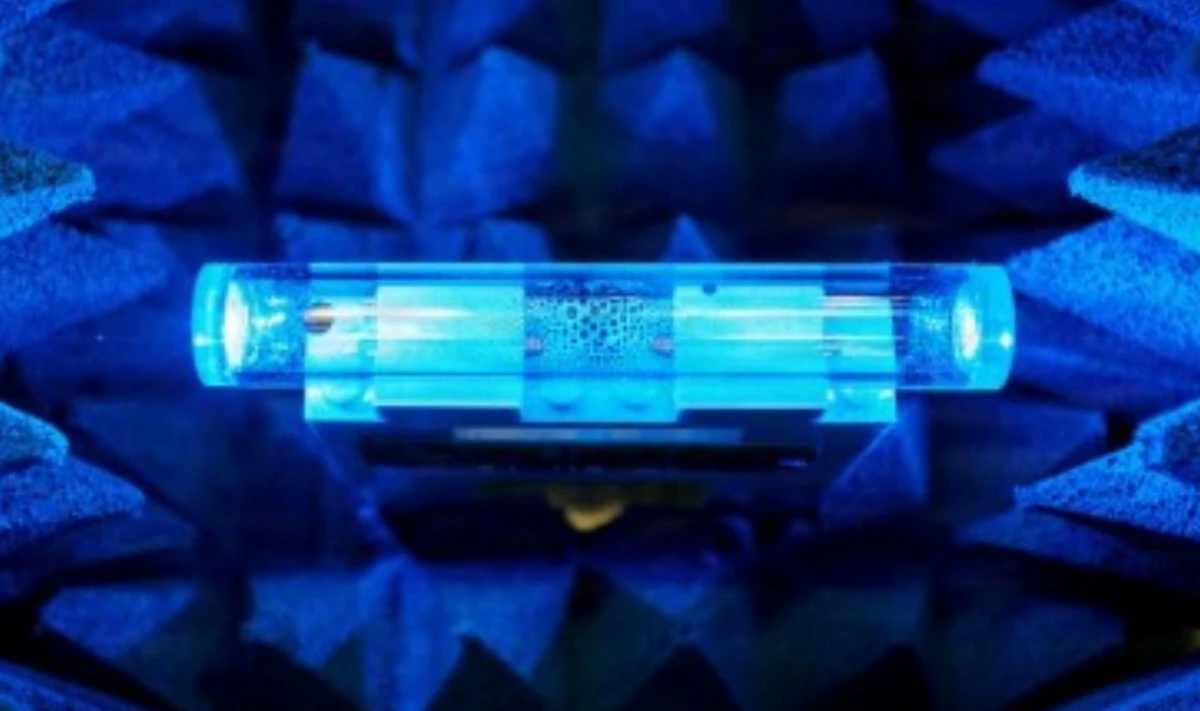
A group of scientists from the U.S. Army Combat Capabilities Development Command Army Research Laboratory (DEVCOM ARL) has created a new quantum sensor capable of determining the direction of propagation of radio-frequency electromagnetic fields in three dimensions.
According to the researchers, such a sensor could improve situational awareness, secure communications, and decision-making on the battlefield. The device operates on the basis of Rydberg atoms: their outermost (valence) electron is in a highly excited state, which makes these atoms extremely sensitive to electric fields, Techcult reports.
The device can determine not only the strength of the electromagnetic field, but also the direction of the so-called k-vector. Unlike conventional sensors, which measure the strength of an electromagnetic field only in one direction, the quantum sensor “sees” the direction and movement of the electromagnetic field, forming a three-dimensional “picture.”
The sensor is based on a tiny glass cell filled with rubidium atom vapor. Under the influence of laser beams, these atoms are driven into the Rydberg state. When a radio wave passes through the cell, the atoms respond to it, making it possible to determine the field’s strength, direction, and movement in three dimensions.
The sensor measures only a few centimeters in size, yet it can determine the direction of incoming signals with an accuracy of about two degrees and may help localize sources of radio-frequency signals in a complex electromagnetic environment.