make preferable
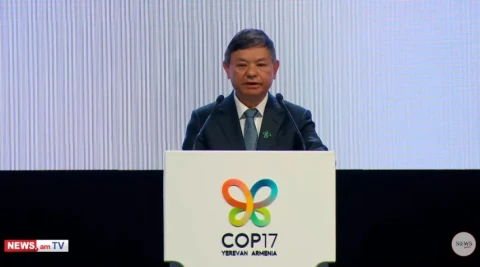
Kazakhstan is ready to cooperate with Armenia during its COP17 presidency and with all partners to leave future generations a safer, more sustainable and more viable world. Kazakh President Kassym-Jomart Tokayev made the statement on October 16 during the Leaders' Summit on Biodiversity held as part of COP17.
According to Tokayev, COP17 must mark a decisive step from declarations to tangible results, with the United Nations remaining at the center of collective efforts to conserve biodiversity.
Tokayev expressed his sincere gratitude to Armenian Prime Minister Nikol Pashinyan for the warm welcome and the organization of what he described as an extremely important conference. He said the participants had gathered to strengthen broad international cooperation in preserving their shared natural heritage, emphasizing that this was a collective responsibility toward future generations, who would face serious challenges and threats. He added that the issue ultimately concerned the survival of human civilization, as biodiversity was fundamental to human well-being, economic resilience and long-term security.
According to the Kazakh president, water scarcity and land degradation had already become everyday realities for millions of people.
He warned that the most alarming consequence was that these processes extended beyond national borders, undermining sustainable development and threatening global stability. The environmental agenda, supported by sound decisions and practical measures, should take precedence over political differences, he said. Tokayev stressed the need for genuine, impartial international cooperation focused on achieving tangible results.
Tokayev also emphasized that protecting the Caspian Sea and its unique biodiversity required a strong commitment.
At the first Caspian Environmental Summit in Turkmenistan, he had called for urgent, coordinated action to prevent irreversible damage to the fragile ecosystem. Over the past century, the Caspian seal population had declined from one million to 270,000. In Kazakhstan, the Caspian seal had been officially listed as a rare and endangered animal species.
Tokayev called on all five Caspian littoral states and the international community to intensify their efforts to protect the species. He said the tragedy of the Aral Sea served as a stark reminder of the devastating consequences of the reckless exploitation of nature, warning that the same fate must not be allowed to befall the Caspian Sea.