Preferred
Domestic policy
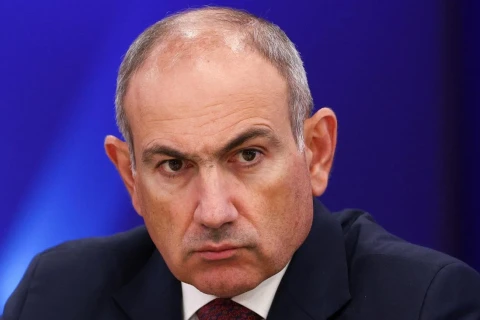
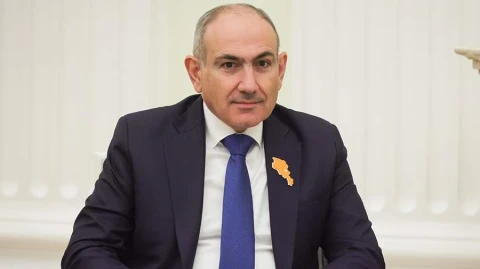
The verdict against Editor-in-Chief of the opposition newspaper Nikol Pashinyan returned on January 19 once more illustrated the huge gulf between the Armenian authorities and the uncompromising Opposition led by the Armenian National Congress (ANC). Despite all the appeals by international agencies, local and foreign human rights and journalist organizations, the minor court of the Center and Nork Marash communities of Yerevan sentenced Pashinyan to 7 years’ imprisonment. All the talks about the guarantees allegedly provided to him by the West, which made him hopefully give himself up to law-enforcers on June 1, 2009, proved false. On the contrary, Pashinyan’s own prediction during his short talk with journalists just before his arrest proved completely accurate: he would be locked up for many years. The 7-year jail term the editor of the most popular Armenian newspaper, Haykakan Zhamanak (Armenian Times), has to serve has dashed the last hope for any cooperation between the Armenian authorities and Opposition. The Armenian authorities have once more showed their inability, or rather unwillingness, to unexpectedly show flexibility, which would have yielded dividends to them. It is obvious that a verdict of not guilty in the Pashinyan case and the journalist’s release would have been a chance for the Armenian authorities to show their European partners their willingness to ease the domestic political crisis and establish a dialogue with the Opposition, which had been an appeal repeatedly issued by the CE Parliamentary Assembly (PACE) and other international agencies. At its winter session PACE is unlikely to strongly criticize Armenia, as European agencies are unwilling to impede the progress in the Nagorno-Karabakh peace process and Armenia-Turkey reconciliation by pressuring the Armenian authorities. However, since the West is practicing double standards, it will certainly take advantage of the situation – the imprisonment of an outstanding opposition representative – and, when required, pressure official Yerevan on some issues or others.
This week the Armenian ex-president Robert Kocharyan has suddenly appeared in public. His appearance seemed dubious and provocative; Armenian journalists learned about his visit to Iran from Iranian sources the following day. The salient fact is that the ex-president, who is not holding any official posts now, not only held meetings with Iranian top officials, but also made important statements on behalf of the Armenian state. Specifically, The Tehran Times reported that at their meeting Robert Kocharyan and Iranian Foreign Minister Manouchehr Mottaki the two discussed issues of bilateral cooperation and regional development. The Armenian ex-president stated Armenia is ready to expand cooperation with Iran. The IRNA News Agency’s report on the retired Armenian president’s meeting with Iranian President Mahmoud Ahmadinejad dispelled all the doubts. At his meeting with the Iranian leader Robert Kocharyan pointed out that Armenian is seeking to expand its ties with Iran. He stressed both the nations have the potential for developing bilateral relations and regional cooperation. So the second Armenian president made statements on behalf of the Armenian state without being authorized.
Within the next few days we can hear numerous comments and opinions on Robert Kocharyan’s return to politics. However, even if he has returned, he has not done so in the best way possible. Iran can hardly be considered a state to visit in order to lay a solid foundation for international support in case of a domestic political crisis. With the dislike shown for Robert Kocharyan by the majority of the Armenian population, his latest efforts are more like a step of despair, an attempt to remind the public of himself. In any case, a probe into public opinion has been launched, and the reasons for Robert Kocharyan’s reappearance will soon become obvious.
Nagorno-Karabakh peace process and region
This week has been marked by the preparations for the Armenian-Russian-Azerbaijani presidential meeting and by disagreements over the prospects of the Armenia-Turkey normalization process between official Yerevan and Ankara.
As before, the Azerbaijani authorities’ policy is in stark contrast to the spirit of establishing peace and stability in the region. January 20, the 20th anniversary of the introduction of Soviet troops into Baku to establish law and order and prevent the annihilation of non-Azerbaijani population, proved to be an occasion for another fit of anti-Armenian hysteria. Distorting the facts about the tragic events in Baku in January 1990 is one of the priority tasks of the Azerbaijani authorities, which are doing their best to give an entirely false version of the events. This year, under orders from the Azerbaijani Presidential Administration, the national mass media spared no efforts to expose “the criminal essence of the totalitarian regime that committed a monstrous terrorist act against the Azerbaijani people that stood up to defend the country’s freedom, independence and territorial integrity.” Azerbaijan’s interpretation of the tragic events is nothing but a manifestation of neo-fascism: Armenian citizens of the Azerbaijani Soviet Republic could be murdered in cold blood without any problems, and those murders were manifestations of “the Azerbaijani people’s aspiration for freedom and independence.” But killing the participants in the Armenian pogroms as Soviet troops entered Baku was a “tragedy” – they were Azeris!
Despite the progressing Nagorno-Karabakh peace process, the Azeri authorities continue their policy of befooling their own people, making “humble servants” of the Aliyev clan of them. Tales about Azerbaijan that “fell victim to the Soviet Empire”, which, all of a sudden, decided to send troops against “peaceful” demonstrators, are being dinned into the people. Nothing, of course, is being said about the extremely cruel Armenian pogroms planned and committed by the Popular Front of Azerbaijan (PFA) on January 13-19, nationalists’ outrage against the Russian servicemen and their families, Baku radio and TV center seized by the PFA and calls for putting an end to “Armenians’ comfortable life in Baku.”
Denying the obvious fact of Armenian pogroms in Baku on January 13-19, 1990, the Azeri mass media, fully controlled by the authorities, continue the anti-Armenian hysteria, creating the image of “Armenian enemy.” On January 20, a day of national mourning in Azerbaijan, Baku TV channels showed an interview with 20-year-old youths born on January 20. And one of the girls with a sad face, in her interview with the Government-controlled AzTV channel, says she never celebrates her birthday and will do so “until the occupied territories are liberated from the Armenian enemies.” What is more, her brother is serving in the Azeri army, “waiting for an order to fight against the Armenian occupation with arms in his hands.” We might as well not have quoted the news report by the Azeri leader Ilham Aliyev’s favorite TV channel if it had not been done just a few hours before the OSCE Minsk Group Co-Chairs visited Baku as part of the preparations for the Sargsyan-Medvedev-Aliyev meeting. So the Azeri President must be the only person that knows how to hold peace talks simultaneously with appeals for war.
The bubble of sly Turkish diplomacy has burst this week. Turkish Premier Recep Erdogan, who often shows emotional and eccentric behavior, eventually “broke down” and “betrayed” the Turkish leaders’ real attitude to the Armenia-Turkey normalization process. Nothing special happened. The top-ranking Turkish official just said what he really thought instead of what he was supposed to say “within the limits” set by Turkey’s principal ally, the United States.
It is quite obvious now that Turkey had been waiting for an opportunity to show its true colors. Such an opportunity presented itself – the RA Constitutional Court’s verdict confirming the constitutionality of the Armenian-Turkish protocols. Picking on a number of explanatory points in the verdict, the Turkish authorities actually act like their Azerbaijani counterparts in distorting facts. According to the Turkish Premier and Foreign Office, the RA Constitutional Court nearly amended the protocols and set preconditions. “The Armenian Constitutional Court acted in secret. Turkey cannot accept secret approaches. We submitted the protocols signed in Zurich immediately and without any changes to our Parliament. We did not change a single word in the protocols, but they underwent an operation in Armenia,” Erdogan said. However, it is the Turkish Premier’s fevered imagination that has to undergo an operation. All of a sudden he concluded that the RA Constitutional Court must report to him, but not act “in secret.” Further the Turkish Premier revealed the real reason for the stir: while demanding that Armenia not set any preconditions, he himself remembered the Nagorno-Karabakh problem and demanded the withdrawal of Armenian troops from the “occupied” territories. The Turkish authorities’ attempt to reap dividends from the RA Constitutional Court’s verdict, resorting to blackmail, and thus thwart the Armenia-Turkey normalization process proved be an ignominious failure. And it is the fathers of the Armenian-Turkish process, Russia and the United States, that have to “clean up the mess” – they are the only ones able to force Turkey to “come to its senses.” Now, however, we are witnessing an interesting situation: in Armenia, one step to the ratification of the Armenian-Turkish protocols by the Parliament, and, in Turkey, threats to thwart the process, as well as attempts to link it to the Nagorno-Karabakh peace process.
Economy and social life
The Armenian Government approved a proposal for an Armenian-German financial cooperation agreement for 2009-2010. Under the agreement, the German Government is to render €105.5m financial assistance to Armenia and other recipients as well as low-interest credits under six programs. The funds are to be provided by the Bank of Germany.
From now on, the Armenian Government will exercise supervision over off-budget expenditures of Armenian agencies. The RA Government amended the Resolution “On the order of serving and registering off-budget funds of government and other agencies” of June 10, 1999. The Government accounts for its decision by the necessity for uniform use of budgetary and off-budget funds and enhancing the financial control and management efficiency. RA Prime Minister Tigran Sargsyan said that the reason for the Government’s decision is the situation at the RA State Revenue Committee and other agencies. “The Committee’s off-budget expenditures have lately been actively discussed. As a matter of fact, we were unable to control them. Our first step is to make all the off-budget expenditures transparent,” the Premier said. Also, uniform standards will from now on be in effect for all off-budget funds. The RA State Revenue Committee purchased 20 watches for its staff members, each watch worth 1,000,000 AMD (about $3,000), as New Year presents.
The Dino Gold Mining Company employees have been on strike this week in Kapan. Their demand is the former wage rates – they were reduced from 250,000 AMD (about $500) down to 100,000 ($300).
T.P