Preferred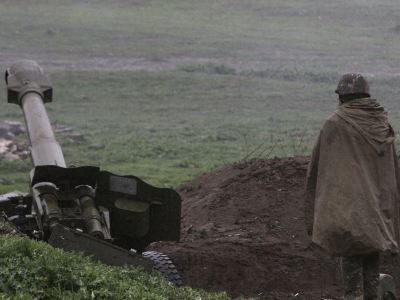
For Nagorno-Karabakh, the rivalry between Armenia and Azerbaijan is a conflict where Russia has lingered behind the scene, arming both sides, German Zenith magazine writes.
“In summer 2014 the ceasefire line, known as the Line of Contact, saw the most serious instances of violence since the Nagorno-Karabakh war ended in 1994. These violent events continued into 2015, with types of weapon deployed that the two sides had not previously used. Regional experts warn of the danger of military escalation of a conflict that they like to describe as ‘frozen’, although we shouldn’t rely on the freeze continuing. The violence getting out of hand cannot be ruled out, which could lead to greater military confrontation.”
Some of them consider the Karabakh conflict even more dangerous than the one between Georgia, Abkhazia and South Ossetia. “The dispute over Nagorno-Karabakh is seen as the key conflict in the South Caucasus, more so than the conflict between Georgia and its secessionist regions of Abkhazia and South Ossetia, even though that led to the Five-Day War between Russia and Georgia in 2008.”
Exactly the Karabakh conflict creates the main obstacle for the regional cooperation, which included three Transcaucasian republics and the country, which the function of a land bridge between Europe and Asia is usually attributed to. “ It constitutes a major obstacle to regional cooperation that involves all three South Caucasian states, and one that thereby restricts the oft-quoted function of this region as a land bridge between Europe and Asia.
True, a corridor has developed between the Caspian and Black seas, between Azerbaijan, Georgia and Turkey through pipelines and new rail and road arteries, but this corridor bypasses Armenia.”
“In contrast to Georgia, where an EU monitoring mission is stationed on the administrative borders with Abkhazia and South Ossetia, in Nagorno-Karabakh there is no appreciable international monitoring along the ceasefire line, the Line of Contact. Thousands of soldiers and snipers face each other over this minefield-strewn, tunnel-pocked line. The description of the border as the ‘line of contact’ has a cynical edge, when ‘contact’ refers primarily to the clash of arms.”
It’s hard for the Armenian side to expect peace, considering the bellicose statements from Baku and the absence of guarantees for Nagorno-Karabakh.
“Civil society in authoritarian regimes generally has a poor standing, particularly those who promote dialogue with the opposing side in a conflict. In Azerbaijan, the state’s dealings with civil society have hardened considerably over the last two years.” Numerous journalists, human rights defenders and scientists, who called for a dialogue with Armenia, have been arrested and imprisoned.
“This conflict should increasingly appear on the international political agenda. The European Union has so far taken a restrained approach to this issue and left mediation to the OSCE and its Minsk Group. Nagorno-Karabakh should be a theme in international politics, with Russia needed as a partner, but it has been overshadowed by the crisis in Ukraine. Russia is moreover a shady actor in this conflict, arming both sides to a considerable extent, even though it has a particularly close security and political relationship with Armenia.”
Another external actor, Turkey, has been developing its influence in the South Caucasus region in the post-Soviet era, above all in the economic sphere. It can hardly play the role of neutral mediator in this dispute, as it sees Azerbaijan as a ‘brother country’, while Armenia’s relationship with Turkey is in historical terms deeply troubled,” the article reads.