make preferable
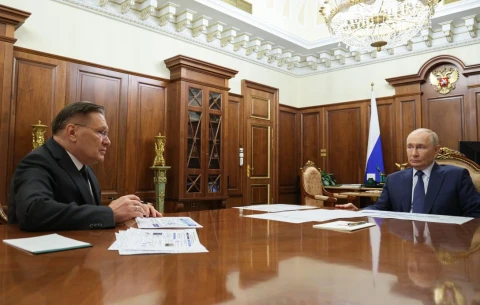
Scheduled for September 17, RA President Serzh Sargsyan’s meeting with the leaders of Armenia’s political forces is, by definition, supposed to become a key event in the six-week political consultations on the initialed Armenian-Turkish Protocols. However, the lack of direct dialogue between the Armenian authorities and the chief opposition political force, Armenian National Congress (NC), will apparently play its negative role by diminishing the public importance of the domestic political consultations.
The ANC has refused to take part in tomorrow’s meeting. As regards the other opposition forces, Heritage Party and Armenian Revolutionary Federation (ARF), both of them are going through “hard times” now. The former is faced with a split and a deep crisis within its ranks, while the latter has not only lost its electorate, but also fails to realize the need for a consistent policy. As a result, the domestic political dialogue will at best be “an indirect” one.
At rallies attended by thousands of people, the Leader of the Opposition that is not represented in the Armenian Parliament, Levon Ter-Petrosyan, made repeated appeals to President Serzh Saregsyan for a dialogue. The only precondition set by the radical Opposition (which is supported by its electorate) was the release of its representatives under arrest. However, the Armenian authorities have repeatedly proved their readiness for concessions to their political opponents only after finding themselves “in deadlocks” or under international pressure. So, after the June amnesty, about 20 of Ter-Petrosyan’s supporters still remain imprisoned. One would hardly believe Ter-Petrosyan will provide any support to the authorities as long as his supporters remain imprisoned.
In this context, the ANC’s refusal to take part in the consultations appears to be logical. However, one factor should be remembered: the first president of Armenia has always been for normalizing relations with Turkey and reopening of the Armenian-Turkish border, which was the reason for his being accused of pro-Turkish orientation. So at the Friday rally he can only be expected to criticize a number of points of the Armenian-Turkish Protocols, which are supposedly to Armenia’s disadvantage, but not decry the document as a whole. No doubt, quite a number of concrete proposals for causing the normalization process to take a course more favorable for Armenia will be heard at the rally. The Armenian authorities making use of them may actually prove to be “an indirect” dialogue with the chief opposition force, the most effective process as part of domestic political consultations, which are to be officially completed in three weeks.
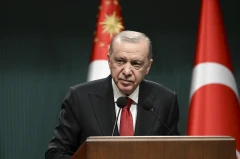
As regards tomorrow’s meeting between the Armenian President and the leaders of the country’s political forces, it is noteworthy that, in any case, such a meeting is a beneficial one. Turkish President Abdullah Gul, too, is holding similar meetings with the leaders of all the political parties that received at least 1% of votes at the latest parliamentary elections.