make preferable
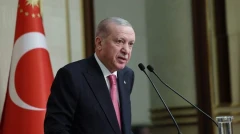
The other day Turkish Premier Recep Tayyip Erdoğan organized a peculiar game to make the impression that the Turkish Government is going to drift away from the policy of normalizing its relations with Armenia. This was done by means of statements apparently designed to provoke official Yerevan’s negative reaction.
Specifically, at his meeting with the managers of local media outlets late last week, the Turkish Premier ruled out the reopening of the Armenian-Turkish border before the Nagorno-Karabakh conflict has been settled. Recep Erdoğan must have meant the signing of a framework agreement between the Armenian and Azerbaijani Presidents. So the Turkish leaders are making one more attempt to link the Armenian-Turkish rapprochement to the Nagorno-Karabakh peace process despite international mediators’ repeated statements that the two processes are simultaneous, but independent of each other.
To our delight, RA Foreign Minister Edward Nalbandyan gave a rapid and clear response this time. It was for the first time since “football diplomacy” was launched that he had warned the Turkish authorities that the Armenian-Turkish rapprochement might be wrecked. “If the Turkish leaders have problems with signing the documents, they must not try to resolve them in defiance of the spirit, letter and purposes of the initialed documents,” the Armenian Foreign Minister said, commenting on his Turkish counterpart’s statement.
The Turkish leaders do have problems, indeed. On the one hand, Baku’s incessant howl, which makes top-ranking Turkish officials declare their love to their “younger brother.” On the other hand, the pressure on the part of the Turkish Opposition, which is widely represented in Parliament and, if supported by some members of the ruling party, capable of torpedoing the ratification of the Armenian-Turkish Protocols. However, the picture does not seem to be so clear in the context of the recent steps made by Turkish Foreign Minister Ahmet Davutoglu. In this delicate situation, when the large parliamentary factions are not inclined to vote for the ratification of the Protocols, Minister Davudoglu was supposedly to exert efforts to diminish their influence on public opinion. However, quite the opposite is taking place during the political consultations in Turkey: the Foreign Minister is holding meetings with the leaders of all small parties that received at least 1% of votes at the recent parliamentary elections. All this despite the fact that the political “dwarfs” were expected to pronounce against normalizing relations with Armenia in the hope of reaping political dividends. As a result, Ahmet Davudoglu’s praiseworthy initiative to make the domestic political consultations as open as possible produces an impression that most of the ruling elite representatives disagree with the Protocols.
What is the reason? One may arrive at the following two conclusions: the Turkish leaders hoped for the Armenian public to torpedo the process, as they did not expect a calm, and even positive, response in Armenia; official Ankara simulates serious opposition to the final signing of the Protocols for the purpose of reducing the influence of the Armenian forces that object to the documents but remain inactive, as they hope the Turkish Parliament will vote them down. Anyway, the Turkish authorities’ behavior adds to tension in the Armenian-Turkish rapprochement process, which may prove to be irreparably damaged.