make preferable
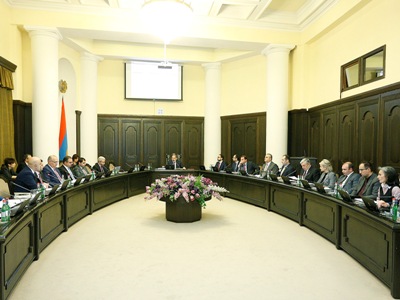
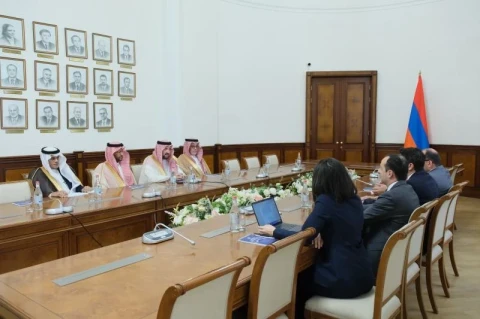
During its March 7 session, the Armenian government approved the draft decision on making amendments to the Criminal Code. The draft decision proposes to supplement Article 64 of the Criminal Code with part 3 to read as follows: “ “3. A punishment milder than the punishment provided for by law may be imposed on persons not having attained the age of sixteen at the moment the court judgment is rendered or on pregnant women or on persons taking care of a child under the age of eight, where the mildest type of punishment provided for by the relevant article of the Special Part is arrest”.”
The issue was presented by Minister of Justice Artak Zeynalyan, who mentioned the following:
“Part 2 of Article 57 of the Criminal Code, under the title “Arrest”, prescribes the following: “Arrest shall not be imposed on persons not having attained the age of sixteen at the moment the court judgement is rendered or on pregnant women or on persons taking care of a child under the age of eight”.
Of course, this norm, which is provided for by humanitarian motives, has led to certain problems in law-enforcement practice. Since it is impossible to impose arrest on those persons, the court is compelled to apply a stricter punishment, that is, imprisonment.
This problem emerges when the sanction in the relevant article does not provide for any other type of punishment besides arrest and imprisonment, and in such conditions, only imprisonment can be applied to the given person. This is a stricter punishment than arrest.
If the court assesses imposition of the imprisonment type of punishment under the specific case as disproportionate, the only thing left for the court to do is to impose a punishment milder than the envisaged punishment by way of enforcing Article 64 of the Code for the purpose of not allowing violation of the rights of the person, even in case of absence of the grounds for that punishment.”
According to Zeynalyan, this regulation will provide courts with the opportunity to avoid such situations.