make preferable
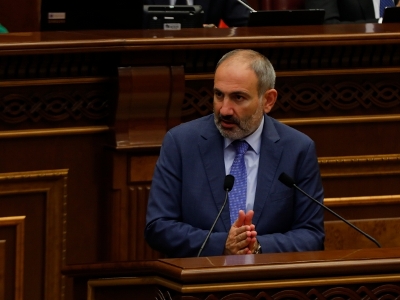
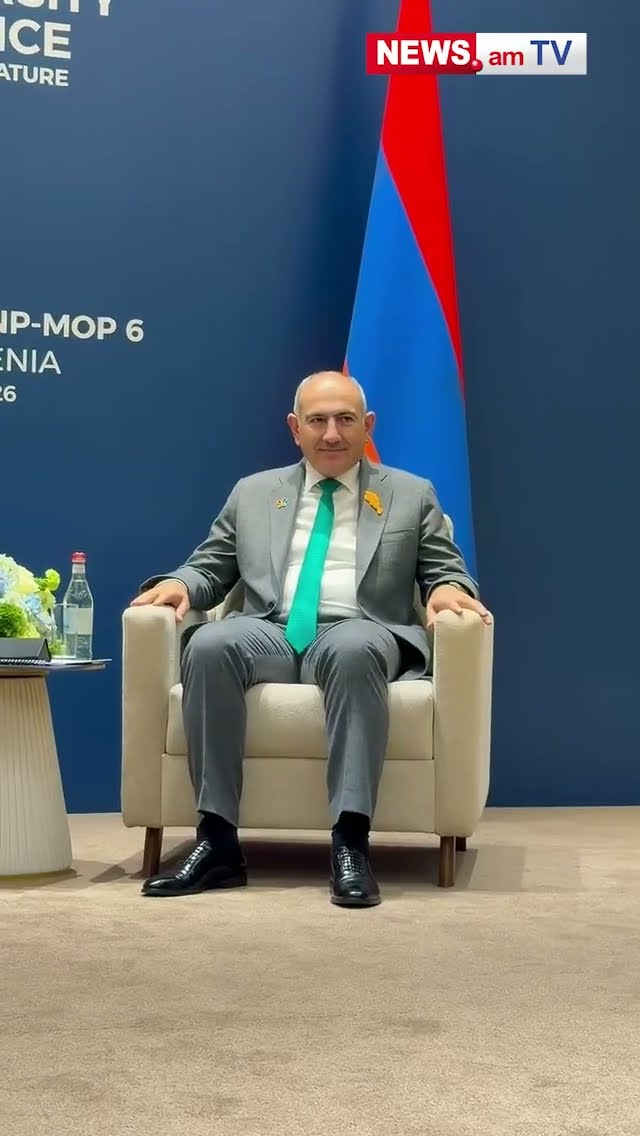
YEREVAN. – The people who ruled Armenia in the past in the post-war period have made statements that need to be clarified. Pashinyan, Prime Minister Nikol Pashinyan on Wednesday stated this at the National Assembly of Armenia while presenting the report on the implementation and results of the government program for 2020, referring to the matter of settlement of the Nagorno-Karabakh (Artsakh) conflict.
"In our scene, an understanding has been created that the side that shows a non-constructive approach in the negotiations, the international community puts pressure on that side to bring it to a constructive field. This is just a simple delusion because at least since 2011, when Azerbaijan adopted a destructive approach, the international community did not persuade Azerbaijan to come to a constructive field, but set a task for the Armenian side that, ‘You know, to make more concessions so that will be possible to bring Azerbaijan to a constructive field.
The claims that there are agreements on the referendum are also an attempt to mislead our people. Yes, there was a referendum provision in the negotiations, including those discussed after 2015-2016, and it was said that it should express the free will of the entire population of Nagorno-Karabakh. But there is no emphasis on where the referendum will take place; the areal is not described. Azerbaijan had a position that according to its constitution, its logic, the issue of any part of its territory can be clarified only by a referendum which should take place in the entire territory of Azerbaijan; this was Azerbaijan's position in the talks. When the question arose as to how we would interpret this provision, the [OSCE Minsk Group] Co-Chairs' response was: 'The interpretation that Armenia and Azerbaijan will agree on;’ this interpretation is acceptable to us," Pashinyan said.
He also raised the question of what the phrase "the whole population of Nagorno-Karabakh" means. “According to Azerbaijan, this means internally displaced persons, including family members born after deportation. Let us note that according to the available data, due to the well-known events, about 40,000 Azerbaijanis left the NKAO in the context of the first Artsakh war. And what specific question will be put to the referendum? Who will formulate that question? There were no clear answers to this question either.
A principled nuance that has been hidden from the Armenian society for a long time is very important. When [ex-President] Serzh Sargsyan says that Azerbaijan rejects the Madrid version of the solution to the problem, it is necessary to understand what this means. In the Madrid version, there is a concept of ‘intermediate status.’ Azerbaijan, in fact, has been refusing to discuss interim status since 2011. It seems that in these conditions, as a result of negotiation skills, the Armenian side could achieve that the mediators persuaded Azerbaijan to, ‘Come, accept this interim status.’ But the fact is that this position of Azerbaijan has been supported by the mediators since 2014-2015, and the war of April 2016 started after the mediators proposed to the Armenian side to renounce the demand for recording the interim status.
I want to clearly note that two months before April 2016, there was a clear proposal from the mediators that the Armenian side renounce [its] aspirations for recording the interim status. The Armenian side refused and two months later the April war started, which, due to its cessation after territorial losses, in fact, becomes, should have become an imposition of the agenda I mentioned; that is, the renunciation of the interim status," said Nikol Pashinyan.