Preferred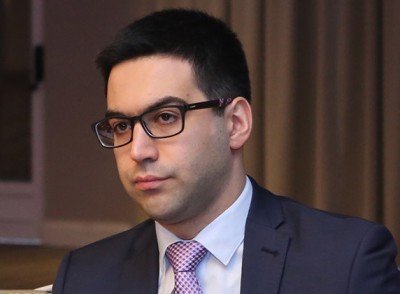
Acting Justice Minister of Armenia Rustam Badasyan answered to the questions of Armenpress regarding whether Nikol Pashinyan can be considered as Acting Prime Minister after resigning from this position and whether there is a legal opportunity for replacement. Below is the text of this interview.
Mr. Badasyan, after the resignation of Prime Minister Nikol Pashinyan aimed at triggering snap parliamentary elections, the discourse whether he can continue serving as acting PM or not still continues. After all, is there a concrete response to this question?
Of course, there is a clear response, but the discourse is highly artificial. After resigning, the prime minister, as well as the other members of the Cabinet continue fulfilling their duties until the formation of a new Cabinet. In particular, according to Article 158 of the Constitution, the government submits its resignation to the President of the republic also when the prime minister resigns. According to that same article, it is envisioned that the Cabinet members continue fulfilling their duties until the formation of a new Cabinet. And the composition of the Cabinet members is defined already by Article 147, according to which the government is composed of the prime minister, deputy prime ministers, and ministers.
Various parallels are drawn between the resignation cases of [ex-President and PM] Serzh Sargsyan and Nikol Pashinyan [in 2018]. Is there a difference between these two resignation processes?
Look. On April 23, 2018, a decision was adopted by the government according to which the government, based on the respective regulations of the Law on Composition and Activity of Government and the statement of Prime Minister Serzh Sargsyan, decided to state the impossibility of Serzh Sargsyan’s fulfilling his powers.
At that moment, in the cases of the absence of prime minister and the impossibility of fulfillment of powers, according to the government’s decision defining the procedure of replacement of PM, Serzh Sargsyan has been replaced by first deputy prime minister Karen Karapetyan because of the impossibility of the fulfillment of duties by the PM; that is, leaving aside the grounds of impossibility, in this case the issue of applicability or non-applicability, it has been, in fact, stated by the decision in April 2018 of the government of the previous authorities that the PM’s resignation doesn’t result in the exclusion of him from fulfilling his duties, and a necessary act is needed to replace Serzh Sargsyan with Karen Karapetyan.
Let me say more. When Prime Minister of the Republic of Armenia Nikol Pashinyan resigned on October 16, 2018, he continued fulfilling his duties until the formation of a new government in 2019.
That is, not only the aforementioned articles of the Constitution clearly regulate this matter, but also there has never been another perception over this matter.
Mr. Minister, let’s imagine that the PM doesn’t continue fulfilling the duties of the PM after resignation. In that case, is there a legal opportunity for replacement of the PM?
Thank you for a good question. Let’s accept that the PM should not continue fulfilling his duties after his resignation until the new Cabinet is formed. In that case, where is his replacement procedure? Such a procedure, moreover, should have been defined exclusively by the Constitution because, in fact, we are talking about the constitutional security component. According to the decision of the government as I mentioned above, replacement procedures for the PM are envisioned only in the cases of the absence of the PM and the impossibility of the PM from fulfilling his duties, none of which includes the case of resignation of the PM.
And today I notice that one part says that one deputy prime minister should hold office, the other part—the other, but not a single legal basis for what is said is presented; that is, those people, who claim that only the prime minister cannot continue fulfilling the duties of the PM until the formation of a new Cabinet, in fact, claim that the republic of Armenia should not have a head of the executive [branch of] power until the formation of a new Cabinet, and I believe we all realize such claim being baseless and, permit me to say, absurd.