make preferable
“Relations between Turkey and Armenia have been overshadowed by the Armenian genocide for close to a hundred years,” says Dr Charles Tannock, MEP Foreign Affairs Spokesman of the ERC Group (European Conservatives and Reformists) in the European Parliament. He maintains that the protocols signed October 10 in Zurich aimed at establishing diplomatic relations and opening the common border, represent a remarkable peak in relations between those two countries. “The question is whether the protocols will have a chance of ever being implemented,” underlines Mr. Tannock, NewEurope reads October 18.
“Of course, there have been accusations against Turkey of making empty gestures over Armenia to impress the West, particularly the EU, which Turkey hopes to join one day. Isolated and economically stagnant, Armenia has much to gain from normalized relations and a re-opening of the shared border. So it has made great efforts and painfully offered to ignore the genocide issue for now, to reach out to Turkey.
But the strategy became more obvious, when Turkey inserted a quasi precondition to the ratification of the protocols, the resolution of the conflict about Nagorno Karabakh, which is official Azerbaijani territory despite being part of Armenia's historic homeland and 90 per cent of the population being ethnic Armenians. Foreign Minister Davutoglu wanted to make a respective speech at the signing ceremony, which US pressure prevented in the very last minute – so no speeches were consequently held.
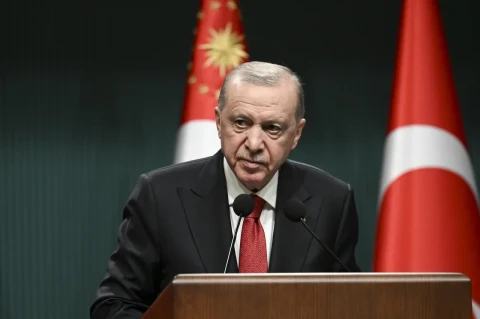
Turkey's breakthrough with Armenia has incited a sharp deterioration of relations with Azerbaijan, which remains on a war footing with Armenia. Erdogan said only one day after the signature what Davutoglu was not allowed to say on the evening: The Turkish parliament would find it difficult to ratify the protocols as long as there are Armenian troops on Azeri territory, i.e. in Karabakh. This statement seems to signal that Turkey does not intend to open the border in the foreseeable future.
Observers feared that this could lead to a total breakdown of the process, but the Armenian President apparently decided to show to the world that the ball remains in the Turkish court, by announcing that he would still visit Turkey for the return football match between Turkey and Armenia on 14 October.
The biggest problem with Erdogan’s statement is that it renders the frozen conflict Karabakh dispute virtually unsolvable. Experts were hoping that a normalization of relations between Turkey and Armenia would force Azerbaijan to make more meaningful proposals in the negotiations about Karabakh. Instead, the situation is now inverted.
The Azerbaijani leadership now knows that any concession on Karabakh would also trigger a victory for Armenia’s diplomacy vis-à-vis Turkey, open the border and strengthen Armenia’s independence. Baku has said several times that all this would be contrary to its national interests.
Azerbaijan may have a lot of oil and gas, but Turkey is indispensable to the transport and marketing of those energy resources to key European markets. This consideration correlates with the view of many analysts that Turkey wants above all to portray itself as a reliable energy hub essential to Western energy security. By kicking up a fuss about the Turkey-Armenia rapprochement, Azerbaijan will irritate its Western partner, whose approval will be vital as Azerbaijan itself seeks greater integration into Euroatlantic security and economic structures,” says Mr. Tannock, NewEurope informs.