make preferable
It has long been accepted in the scientific world that the tectonic plates of Venus cannot move due to the very thick lithosphere. But a recent study by astronomers in California has disproved that notion.
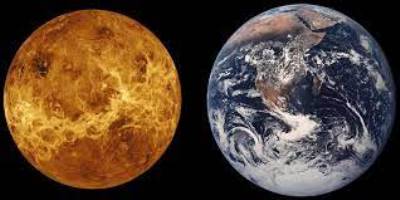
At first glance, the nearest neighbor of the Earth is very different from it. Venus’ conditions are harsh, to say the least. Its atmosphere is extremely dense, with clouds formed from sulfuric acid. And the temperature on the surface is more than 460 degrees Celsius.
However, it was previously thought that Venus has more in common with Earth than Mercury or Mars because of its hot core.
On the one hand, the hot core factor, which proves the level of thermal radiation of the planet, should contribute to tectonic activity. But according to the earlier existing hypothesis, Venus has an extremely thick and viscous lithosphere, and this should prevent the movement of tectonic plates on the surface.
However, according to a study published in the journal Nature Geoscience, Venus is almost no different from our planet in terms of tectonic activity. This is the conclusion reached by the scientists at the Jet Propulsion Laboratory in California.
It turns out that Venus is even more tectonically active than Earth on average. Now it is at about the same level of geological history as the Earth was in the Archean Eon; that is, 4 to 2.5 billion years ago. But there is a big difference. Venus has no ocean, while Earth has had oceans since ancient times.
Topic
Location