make preferable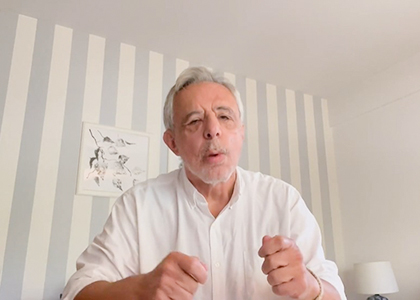
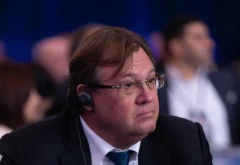
Armenian PM Nikol Pashinyan's aspiration for peace collides with Azerbaijani President Ilham Aliyev's "exclusion of revanchism" policy. Armenia’s former Foreign Minister Vartan Oskanian wrote this on Facebook. He added as follows:
"Aliyev constantly talks about revanchism. What is he afraid of? He is afraid of any situation where Armenia is not on its knees. Therefore, there is no peace formula that implies a developed Armenia that has straightened its back, an Armenia with a growing economy because all that is Aliyev's nightmare.
All the theories put forward by Armenia’s authorities due to naivety, inexperience or other circumstances, that there is a formula that giving up Artsakh [(Nagorno-Karabakh)] today, and maybe tomorrow, some territory of Armenia will guarantee stability and development to the country, are illusions.
Azerbaijan is now trying to get a resolution where Armenia will be as weak as possible, an Armenia without any development prospects in the long term.
For that they will snatch everything possible and even more. Even if all of Aliyev's most unacceptable demands for us are met, new ones will be born in the process. He will try to get such a situation where the state of Armenia will always be humiliated, dependent on others, including his will, without army and economy, without investments and friends.
Aliyev is well aware that any next authorities of Armenia will raise the issue of the rights of the Armenian people. Any next authorities may have better skills in negotiating, putting the issue on the table, and coming to an agreement with the forces playing on the issue. In the end, Aliyev, unlike our current authorities, knows that it is possible to negotiate better, it is possible to put diplomatically acceptable proposals on the table, that today's situation in Armenia is neither a matter of fate nor circumstances, but the matter of the negotiator of the day. Therefore, today he will snatch so much from the [incumbent] authorities of Armenia that the positions of the next authorities will be as weak as possible.
Now it is obvious to everyone that Aliyev will not sign anything [except] in exchange for [Armenia] renouncing Artsakh, even [Mount] Ararat, renouncing Armenian history. Otherwise, he would have signed by today. He will extract tangible concessions in the form of Armenia’s territories, the corridor, unacceptable for us, with such humiliating manifestations that in case of any turn, any authorities in Armenia, being weak and humiliated, will already try to get the minimum, which even according to international maps belonged to us from the beginning. Aliyev will try to achieve that the further negotiations will be about getting ours back according to all international legal norms, and it will be ridiculous to even imagine the rights of the people of Artsakh on the agenda.
The way to avoid this scenario is not to agree to all demands. The more we give, the more they will want because they have no intention of guaranteeing peace. They intend to keep Armenia in constant fear, as they have caught the fear of these authorities. The way to avoid this is to put a demand on the table: the just demand of the return of the people of Artsakh [to their homeland]. At least for the reason that it is a subject of negotiation. Otherwise, the only subject of negotiation today seems to be the right of the Armenian people to live in this region.
The neutralization of ‘revanchism’ does not happen on paper, it does not happen by changing the constitution. The so-called revanchism will not seem so terrible for Aliyev either if the established peace has minimal foundations of justice, at least it be partially acceptable to the Armenian people as well. Otherwise, Aliyev will always be afraid of the anger of the Armenian people accumulated over the years as a result of injustice, which may erupt in case of any next authorities, any geopolitical change.
Minimum justice implies the return of Artsakh Armenians to their homes with international guarantees, even within the framework of the logic of peace put forward today, with the perspective of self-determination.
All regional and international players are in favor of the return of Artsakh Armenians. Everyone is interested in the fact that the signing of peace around Karabakh has at least minimal stability. It can be concluded from this that there will definitely be countries and organizations that will contribute to the formation of international guarantees on this issue; even the forces that are in conflict with each other.”