make preferable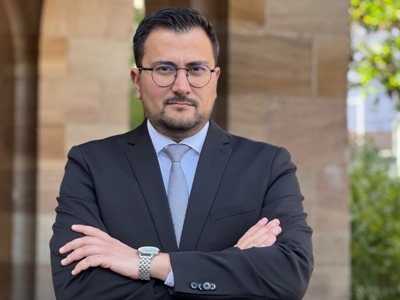
News.am is continuing its series of interviews with international legal specialists, human rights defenders, and human rights protection experts to understand what needs to be done and what mechanisms are in place for the 23 Armenian prisoners illegally held in Baku in order to protect the rights of the military-political leadership of Artsakh, prevent their torture, and ensure their return.
This time, we spoke with Dr. Gurgen Petrossian, president of the German-Armenian Lawyers’ Association and a lecturer at the University of Erlangen-Nuremberg and the International Nuremberg Principles Academy.
Dr. Petrossian, are you following the situation in Armenia, specifically the developments since the 2020 war and the loss of Artsakh?
Of course, we have followed the situation. Moreover, since 2020, the German-Armenian Lawyers’ Association has been regularly speaking out through different legal platforms in Germany about what happened during and after the war, based on the concept of universal jurisdiction, which is widely recognized and accepted in Germany. We filed international criminal reports with the Office of the Federal Prosecutor in Germany, reporting war crimes that occurred during the 44-Day War. The aim is for the perpetrators of these crimes to be prosecuted when they enter Germany, because under German law, regardless of where these international crimes are committed, they can be prosecuted in Germany. There have been similar cases involving Syrian and Iraqi Islamists who have been prosecuted. We have filed these reports and are pursuing the prosecution of these criminals once they enter Germany. By the way, we also presented a similar report about the Azerbaijani "fitness blogger" who was arrested in Moscow and then released.
The German Office of the Federal Prosecutor has started the research phase, and the moment when the person in question appears in the country and we inform them about it, the law enforcement agencies will take the necessary steps.
Are you aware of the interstate lawsuits submitted by Armenia to international legal courts? One of the pressure points Azerbaijan places on Armenia is for Armenia to give up these claims. What do you think about this, and what consequences could it have for our country?
This can yield extremely serious consequences. I have repeatedly stated in my interviews that Armenia should not give up its legal demands in any way, because the war crimes and human rights violations that were committed against the Armenian population — during the war, during the period following it, and during the deportation — should not be removed from Armenia's agenda. It will mean that Armenia no longer has any demands from the authorities of Azerbaijan. We do not have the right to move forward with that process, because we must not forget that the persons who were forced to leave Artsakh have the right to return, and this issue should be regularly raised in international courts.
I did not use the term "deportation" by accident. Deportation is considered an international crime against humanity, and it has transnational significance. And since, since February 1, Armenia is a member of the Rome Statute and has retroactively recognized the jurisdiction of the International Criminal Court (ICC), this means that the ICC can use this jurisdiction to start investigations against high-ranking individuals in Azerbaijan.
A few months ago, one of the Armenian-American non-governmental organizations submitted an application to the prosecutor of the ICC based on the facts that happened, and I think such applications should be continuous so that the issue remains in the prosecutor's focus. Our mission should be for the state and other pan-Armenian and non-governmental organizations of Armenia, cooperating with each other, to prepare such material so that the prosecutor will be able to immediately accept the proceedings and launch the investigation.
Our series of interviews with experts and human rights defenders refers to the protection of the rights of the Armenian prisoners illegally held in Baku and the former political and military leadership of Artsakh, and the possibilities of their return. Azerbaijan continues to detain them illegally, extending the terms of their detention without any justification (the last time for five months), and last month, Ruben Vardanyan's legal team submitted a torture claim to the United Nations (UN) Special Rapporteur on Torture. Recently, the president of the Parliamentary Assembly of the Council of Europe (PACE) expressed concern that Azerbaijan refuses to cooperate with the PACE Committee for the Prevention of Torture. According to you, what can be done in this situation to protect the rights of citizens of the Republic of Armenia (RA) held in Baku prisons? What levers can be utilized?
This is a very painful and complicated issue, and, unfortunately, the legal mechanisms in this matter are quite limited.
Yes, the appeal to the UN Rapporteur and the statement of the PACE Committee for the Prevention of Torture are important, but they do not contain mechanisms for the release and return of the Armenians held in Baku, which is what we are striving for.
One of the tools is that the UN International Court of Justice (ICJ) can record state responsibility for a violation of the Convention Against Torture and accordingly assign reparations. The failure to provide these preparations could result in state responsibility for Azerbaijan.
As for the RA, it is important for the Armenian side to regularly raise the issue that similar violations of human rights are taking place and that more than two dozen Armenians are illegally detained by the Azerbaijani authorities. But there is no noticeable indication that the RA is in any way interested in putting that item on the agenda. Maybe it is on the agenda, but, at least in the public arena, it is not clear that the RA is trying to attain the release of Armenians illegally held in Azerbaijan.
The Azerbaijani authorities have brought false criminal charges against the former leadership of Artsakh and consider them not prisoners or political prisoners, but "criminals" who must face "Azerbaijani justice." The Prosecutor General of Azerbaijan recently announced that the cases of 15 Armenian prisoners, including Artsakh figures, will be transferred to the court "soon." Is there any possibility to ensure the presence of international experts at those court sessions?
This is, perhaps, one of the most important issues, and it is necessary to do everything possible to involve high-quality international defenders in these cases. Naturally, Azerbaijan will try, in every possible way, to limit the international presence during these trials, claiming that, according to Azerbaijani laws, only lawyers licensed in their country can be involved and so on, but every opportunity should be used. The fact that it is still not clear what kind of strategy Azerbaijan is going to pursue in terms of these cases should also be taken into account here.
Summarizing the general topic, it would be very desirable to see cooperation between the Armenian authorities and various state bodies, as well as coordinated work with NGOs on the aforementioned issues, which is extremely important for a country facing such geopolitical realities as Armenia.
From 2020 until now, Azerbaijan's actions within the framework of international law have been aimed at closing the Artsakh issue from both a legal, political, and strategic point of view. Meanwhile, Armenia did nothing during that time to counter and prevent their policies using the same instruments of international law. It was necessary to start a large number of legal processes, which was not done. There was a need for coordinated and competent work between state institutions, the NGO sector, and other structures, which was not done and is not being done. One should never be skeptical about the tools of international law; one should be able to use them competently and work professionally with the people behind these institutions. We now see the increasing importance of international law in various conflicts. See, for example, how Guatemala, on the basis of the Genocide Convention, submits an application against Germany to the UN ICJ and how South Africa submits an application against Israel. In other words, states are highly aware that international law can be used in the right direction, and these tools should never be underestimated.