make preferable
Prior to COP29, there were publications in the media, including leaks, that the possibility of releasing several prisoners in exchange for Armenia's participation in COP29 was under discussion. However, none of this happened, and Armenia did not express any official position regarding its reasons for not participating in COP29. NEWS.am spoke to Siranush Sahakyan, human rights activist and representative of the interests of Armenian prisoners in international institutions, regarding this and other topics related to Armenian prisoners of war and political prisoners.
Ms. Sahakyan, before COP29, there were predictions that Azerbaijan might release some prisoners. However, this did not happen. What do you think was the reason behind this? Is Azerbaijan hardening its position?
I think that the unsuccessful course of the negotiations was the reason why the Armenian delegation abstained from participating. Judging by the statements, the price of the Armenian delegation's participation was the return of a certain number of prisoners, a matter on which the parties unfortunately could not agree. Naturally, this did not apply to the former leadership of Artsakh. According to my observations, there were discussions and negotiations, and the Armenian side could legitimately ensure its presence in exchange for the release of a certain number of prisoners — also taking into account international pressure — but since the Azerbaijani side did not agree to release even a limited number of prisoners, Armenia abstained from attending. This also shut out another important question: what issues should the Armenian representative raise while there?
The positive element, however, was that delegates from other countries still managed to raise issues related to human rights, including those of Armenian prisoners and hostages.
Since the summer, the Prosecutor General of Azerbaijan has issued announcements that the preliminary investigation into the military-political leadership of Artsakh has been completed and the cases have been sent to court, but the trials have not yet begun. According to your predictions, when can the trials begin?
According to various predictions, the trials may begin in the winter or early spring of 2025. Now, after the conclusion of COP29, the Azerbaijani side will most likely focus on the negotiation process, trying to shift responsibility for not signing the “peace treaty” onto the Armenian side in the presence of foreign partners. We believe it likely that after the holidays, legal proceedings will begin, which will also be used as a tool to influence the negotiation process. Delays are possible throughout the process, in light of the fact that the cases are fabricated, there is no evidentiary base, and it will take some time for the Azerbaijani law enforcement system to diligently falsify evidence and present it to the court, in order to create the impression in the public that the actions allegedly committed contain a criminal element.
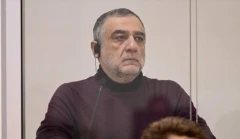
Jared Genser, the international lawyer representing Ruben Vardanyan's family, recently announced that the Prosecutor General's Office of the Republic of Azerbaijan did not allow him to visit Baku and meet with his client. In your opinion, what can be done to ensure an international professional presence at the trial? Is there such a possibility?
The fact that the lawyer’s request was rejected is not surprising; it seems that nothing else would be expected in this case. It is also significant that the lawyer raised this issue, and international human rights organizations and diplomats accredited in Azerbaijan should certainly take note of this.
As for guaranteeing an international presence in sham staged trials, I mentioned in one of my interviews that, according to a number of international documents, a state has the right to provide its citizens imprisoned in another country access to consular services, including to secure an international presence during the trial.
Considering the fact that there are no diplomatic relations between Armenia and Azerbaijan, the government can, according to the Vienna Convention on Consular Relations, authorize a third country to provide consular services on its behalf to its detained citizens.
But this is only a function of the state, which is obliged to conduct effective negotiations for the release of its citizens. With regards to the legal sphere, a great deal of work is being done here with relevant international organizations and human rights institutions.