make preferable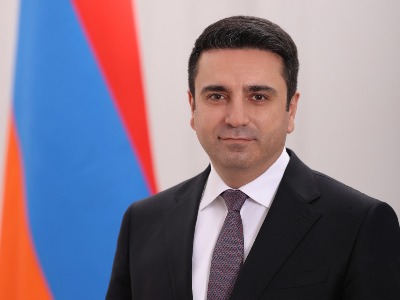
All those who try to participate in professional debates and those who try to start debates should remember that when I say something, especially in public, I always have at least one or two solid proofs/arguments in favor of what I say. This was stated by the Speaker of the Armenian Parliament Alen Simonyan, referring to the statements regarding the legal procedures after the signing of the peace agreement.
He, in particular, noted:
“So, in legal terms, is there a difference between a peace treaty and a peace agreement? Of course not, as the Vienna Convention on the Law of Treaties states.
What are treaties and international agreements? The Vienna Convention on the Law of Treaties defines a treaty as “an international agreement concluded between States in writing and governed by international law, whether it is embodied in a single instrument or in several interrelated instruments, as well as its special meaning”.
Treaties can go by many different names, including international conventions, international agreements, final acts, charters, memoranda of understanding, pacts, protocols. Usually, these different names have no legal significance from the point of view of international law, i.e. the name is not essential to the question of the status of the document - the treaty.
Treaties may be bilateral (between two parties) or multilateral (between several parties) and are usually binding only on the signatory parties. An agreement “enters into force” when the conditions necessary for its entry into force mentioned in the contract have been fulfilled”.