make preferable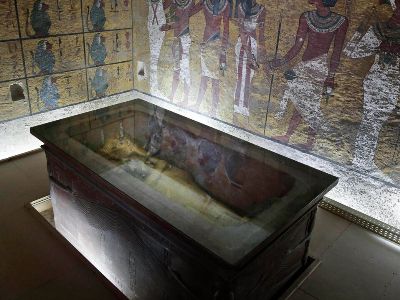
It has long been noted that experts who were among the first to study Egyptian tombs had died early. This also applies to the tomb of Tutankhamun. There was even talk of a curse of the pharaoh.
The Journal of Scientific Exploration has published an article telling about dozens of researchers and their family members who died after the opening of the pyramids. First of all, it was about the tomb of Tutankhamun. The excavations, which were carried out about a century ago, were led by British archaeologist Howard Carter, who also became a victim of this "curse."
Such myths persist—although researchers have long tried to explain the health problems of archaeologists with natural causes, Planet Today writes. One of the theories is the so-called "cave disease," the cause of which is Aspergillus fungi. Particles of these pathogenic microorganisms were found in the tomb of the famous pharaoh.
It is quite possible that the depths of the pyramids have preserved other isolated microorganisms for centuries, to which modern people have no immunity.
There is another logical explanation for the frequent pathologies of researchers of Egyptian history. Thus, in the Serapeum burial complex, experts recorded an excess level of radon, a radioactive gas formed during the decay of uranium. Specific data have been published: the concentration of the substance in this complex is 4-5 thousand becquerels per cubic meter. Meanwhile, according to WHO standards, 100 becquerels per cubic meter are already potentially dangerous.
But this does not apply to the tomb of Tutankhamun, which is located in another place. But the term "Tutankhamun's Curse" is broader and refers to the study of all the sanctuaries of ancient Egypt.